


| Previous day | 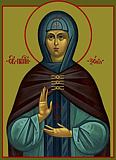 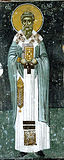 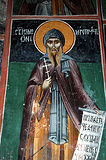 |
Next day |
| Old Style
February 13
|
Thursday |
New Style
February 26
|
|
1st Week of Great Lent.
Tone 4.
Великий пост. |
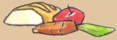 Monastic rule: xerophagy (bread, uncooked fruits and vegetables).
|
 St. Martinian, monk, of Caesarea in Palestine (5th c.),
and Sts. Zoe of Bethlehem and the virgin Photina (5th c.). St. Eulogius, patriarch of Alexandria (607-608). St. Symeon the Myrrh-gusher, prince of Serbia (1200). St. Joseph, founder of Volokolamsk (Volotsk) Monastery (1515). St. George (Konissky), archbishop of Mogilev (1795).
New Hieromartyr Sylvester (Olshevsky), archbishop of Omsk (1920).
Apostle Aquila of the Seventy, and St. Priscilla (1st c.) (Gr. Cal) St. Timothy, archbishop of Alexandria (385). St. Castor of Karden, hieromonk and missionary (Germany) (ca. 400). St. Modomnoc, bishop of Ossory (Ireland) (6th c.).
Repose of Abbess Seraphima of Sezenovo (1877), and Archbishop Seraphim (Sobolev) of Bogucharsk, Bulgaria (1950).
Thoughts for Each Day of the Year
According to the Daily Church Readings from the Word of God
By St. Theophan the Recluse
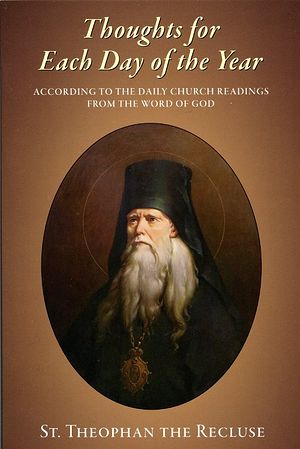
Thursday.
Fear the Lord, and depart from evil (Prov. 3:7). Set this as the goal of your preparation for Holy Communion, so that at the end of this preparation the fear of God will dwell in you, and a firm intention to avoid every evil will take root, even if you should have to lose everything, including your life, in order to do so. Do not limit yourself to an external routine of preparation alone, but focus in particular on yourself, enter within yourself and examine your views, whether they are in agreement in all things with the true word of God. Examine your inclinations and dispositions, whether they are what the Lord demands of you in the Gospels. Examine your whole life, whether it agrees with God’s commandments in every way. Mourn and hate whatever is offensive to God, and set in your mind never to do it again. If you do this, you will be most wise; but you would most unwise not to do this.