


| Previous day |    |
Next day |
| Old Style
May 24
|
Saturday |
New Style
June 6
|
| First Week after Pentecost (Fast-free period). Tone 7. |  Fast-free period.
|
 St. Symeon Stylites (the Younger) of the Wonderful Mountain (596).
  St. Nicetas the Stylite, wonderworker, of Pereyaslavl-Zalesski (1186).
Martyrs Meletius Stratelates, Stephen, John, and 1,218 soldiers with women and children, including: Serapion the Egyptian, Callinicus the Magician, Theodore, Faustus, the women Marciana, Susanna, and Palladia, two children Cyriacus and Christian, and twelve tribunes: Faustus, Festus, Marcellus, Theodore, Meletius, Sergius, Marcellinus, Felix, Photinus, Theodoriscus, Mercurius, and Didymus—all of whom suffered in Galatia (ca. 218). St. Gregory, archbishop of Novgorod (1193).
St. Vincent of Lerins (ca. 450). Nun-martyr Martha, abbess, of Monemvasia (990). Translation of the relics of St. George of the Holy Mountain and Georgia (ca. 1067).
Repose of Monk Cyriacus of Valaam (1818) and Blessed Amphilochius of Rostov (1824).
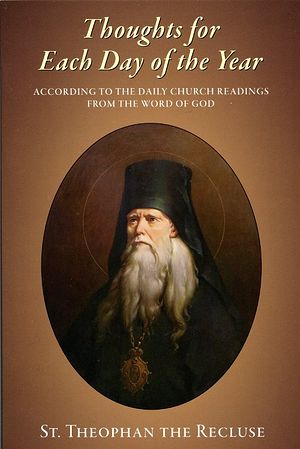
Thoughts for Each Day of the Year
According to the Daily Church Readings from the Word of God
By St. Theophan the Recluse
Saturday. [Rom. 1:7–12; Matt. 5:42–48]
Love your enemies, bless them that curse you, do good to them that hate you, and pray for them which despitefully use you, and persecute you (Matt. 5:44). There is nobody on the earth without love. People love their parents and relatives, benefactors and protectors. But the feeling of love toward parents, relatives, protectors and benefactors is natural and forms unaided in the heart; that is why the Lord does not give it value. True Christian love is proved by our relationship to enemies. Not only should light and incidental annoyances not extinguish our love for others, but not even attacks and persecutions, misfortunes and deprivations, intentionally and hostilely inflicted. We must not only bless these people, but also do good to them and pray for them. See whether you have such a disposition toward your enemies, and judge by this whether you have Christian love, without which there is no salvation.