


| Previous day |    |
Next day |
| Old Style
June 27
|
Friday |
New Style
July 10
|
|
6th Week after Pentecost.
Tone 4.
Fast of the Holy Apostles. |
 Monastic rule: xerophagy (bread, uncooked fruits and vegetables).
|
 St. Joanna the Myrrh-bearer (1st c.). St. Sampson the Hospitable, of Constantinople (ca. 530). Uncovering of the relics of Optina Elders Leonid, Macarius, Hilarion, Ambrose, Anatole I, Barsanuphius, and Anatole II (1998).
St. Severus, priest, of Interocrea in Italy (6th c.). St. George of the Holy Mountain and Georgia (1065). Blessed Martin of Turov (после. 1146). St. Serapion of Kozhaezersk Monastery (1611).
New Hieromartyr Gregory Nikolsky, priest, of Kuban (1918). New Hieromartyr Kirion II, catholicos-patriarch of Georgia (1918).
Hieromartyrs Crescens, Maximus, and Theonest, bishops of Mainz (Germany) (early 5th c.). Martyr Anectus of Caesarea in Cappadocia (304). Martyrdom of Monk Luke (Mukhaidze) of Holy Cross Monastery in Jerusalem (1277). Hieromartyr Pierius, priest, of Antioch (Gr. Cal).
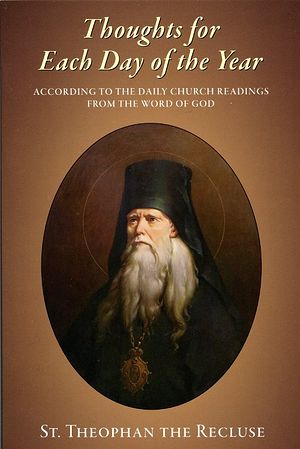
Thoughts for Each Day of the Year
According to the Daily Church Readings from the Word of God
By St. Theophan the Recluse
Friday. [I Cor. 4:5-8; Matt. 13:44-54]
Arriving in Nazareth the Lord found no faith there. His visible simplicity hindered the Nazarenes from seeing His invisible glory and divinity. Does not the same occur with a Christian? Christian dogmas are very simple in appearance; but for the mind which enters into them, they represent an all-embracing harmonious system in and of themselves, which were not, nor ever could be generated by any creature’s mind. Proud-mindedness, casting a fleeting glance at the simplicity of the Gospels, is repelled by it and begins to build its own house of knowledge, which it deems enormous and full of broad horizons. It is in fact no more than a towering house of cards, and the horizons are no more than mirages, phantom products of a heated imagination. But there is no point in telling him. He and his brothers are ready with their critical attacks to immediately cast anyone from the mountain into the abyss who tries to dissuade them; but the truth always passes unharmed through their midst and goes on to other souls capable of receiving it.