


| Previous day | 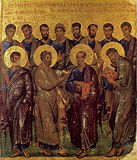 |
Next day |
| Old Style
June 30
|
Monday |
New Style
July 13
|
| 7th Week after Pentecost. Tone 5. |  Fast-free period.
|
 Synaxis of the Holy, Glorious, and All-Praised Twelve Apostles: Peter, Andrew, James and John the sons of Zebedee, Philip, Bartholomew, Thomas, Matthew, James the son of Alphaeus, Jude the brother of James, Simon the Zealot, and Matthias.
St. Peter, prince of the Tatar Horde, wonderworker of Rostov (1290). Glorification of St. Sophronius, bishop of Irkutsk (1918). St. Andrew, prince of Bogoliubovo (1174). St. Stephen of Omsk (1877).
New Hieromartyrs Nicandor (Prusak), hieromonk of Tolga Monastery (Yaroslavl) (1918) and Theogenes (Kozyrev), archimandrite, of Chimkent (Kazakhstan) (1939).
Martyr Basilides the Soldier, at Alexandria (202). St. Martial, bishop of Limoges (3rd c.). St. Erentrude, abbess of Nonnberg Monastery, Salzburg (ca. 718). St. Dinara, queen of Khereti, Georgia (10th c.). St. Gelasius of Rimet (Transylvania) (14th c.). New Martyr Michael Paknanas the Gardener, of Athens (1770). New Hieromartyr Milan Popovic, priest, of Rmanj (1940s). New Martyr Alexander (Schmorell) of Munich (1943). Martyr Peter of Sinope (Gr. Cal).
Repose of Bishop Nestor (Zass) of the Aleutians and Alaska (1882).
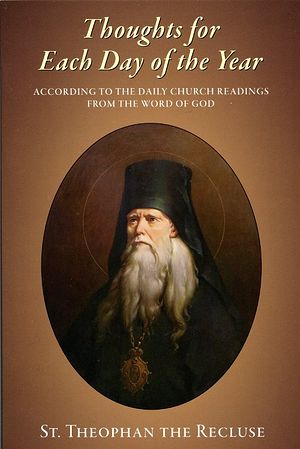
Thoughts for Each Day of the Year
According to the Daily Church Readings from the Word of God
By St. Theophan the Recluse
Monday. [I Cor. 5:9-6:11; Matt. 13:54-58]
The Nazarenes did not believe the word of the Lord, because when He lived in amongst them, He had no attractive lustre or outward dignity that would command involuntary respect from all. “We know who He is,” they said; “there can’t be anything extraordinary about Him.” Their reaction, however, did not induce the Lord to assume an imposing appearance. He remained extremely simple in appearance; later the Apostles bore themselves the same way, as did all of those who truly followed and emulated them. Why is this so? Because it is there is no man-made lustre that could fully correspond to the light of life in Jesus Christ. Moreover, we recognize that it is better to relegate external appearance the lowest value, so that it does not block what is within. Let him who has eyes to see look directly at the latter, without arresting his attention upon the former. The holy Apostle Paul expressed it like this: We have this treasure in earthen vessels (II Cor. 4:7). If we could see what was the outward appearance of those persons whom we now revere and call upon in prayer, we would not believe our eyes—they were so simple. But to this day, those who have come to know the life in Jesus Christ abandon care for their outward appearance and turn fully within. That is why the former falls away on its own, but the latter is raised up and grows. It often happens that nobody even notices this inner brightness, not even the one who possesses it. The human eye is evil; it is not shown what is truly good, if this good can harm it.