


| Previous day | 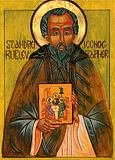 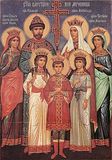  |
Next day |
| Old Style
July 4
|
Friday |
New Style
July 17
|
|
7th Week after Pentecost.
Tone 5.
Fast Day. |
 Wine and oil allowed.
|
 St. Andrew, archbishop of Crete (740). St. Martha, mother of St. Symeon Stylites (the Younger), of the Wonderful Mountain (551). St. Andrew (Rublev), iconographer, of the Spaso-Andronikov Monastery (Moscow) (15th c.).
  Holy Royal Martyrs of Russia: Tsar Nicholas II, Tsaritsa Alexandra, Crown Prince Alexis, and Grand Duchesses Olga, Tatiana, Maria, and Anastasia, and those martyred with them (1918).
Martyrs Theodotus and Theodota, martyred with St. Hyacinth at Caesarea in Cappadocia (108). Hieromartyr Theodore, bishop of Cyrene in Libya, and with him Martyrs Cyprilla, Aroa, and Lucia (310). Burial of St. Andrew, prince of Bogoliubovo (1174). Uncovering of the relics of St. Euthymius the Wonderworker, archimandrite, of Suzdal (1507). New Hieromartyrs Sava, bishop of Gornji Karlovac (1941) (Серб.) and George Bogich, priest, of Nasice (1941).
New Hieromartyr Nilus, hieromonk, of Poltava (1918).
Hieromartyrs Innocent and Sabbatius, and 30 others with them, in Sirmium of Pannonia (304). Translation of the relics of St. Martin the Merciful, bishop of Tours (460-490). St. Ulrich of Augsburg and Bavaria (973). St. Michael Choniates, metropolitan of Athens (1222). Hieromartyr Donatus, bishop of Libya (Gr. Cal).
Repose of Hieroschemamonk John, founder of Sarov Monastery (1737), Righteous Confessor Andrew the Russian, at Cairo (ca. 1850), and Archpriest Tikhon Pelikh of Sergiev Posad (1983). Slaying of General Dragoljub (Drazha) Mihailovic of Serbia (1946).
Thoughts for Each Day of the Year
According to the Daily Church Readings from the Word of God
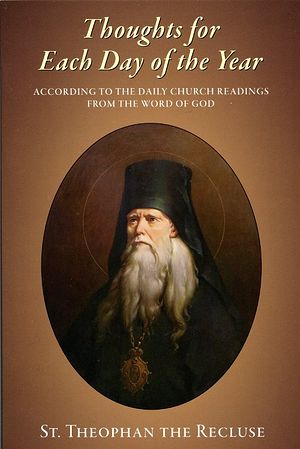
By St. Theophan the Recluse
Friday. [I Cor. 7:35-8:7; Matt. 15:29-31]
Without attentiveness in everyday affairs you cannot do anything properly; but in spiritual matters—it comes first. It notices what is bad and brings it before the inner judge; sets the guard of the inner chamber, where the best course of action is discussed, and then protects the one who carries out the decisions. This is not surprising, because the spiritual life in its fullness is called a sober life, and in patristic writings we meet mostly words about soberness or attentiveness, for they are one and the same. Therefore, how important it is to make a habit of attentiveness! The initial labor of those who have begun to be concerned about their souls is usually directed toward this. And their work only begins to resemble work from the point where attentiveness begins to be gathered within themselves; usually the attentiveness is all external, and not internal. From this moment the inner life is conceived and with this attentiveness it ripens and strengthens. What does this mean? It means standing with the mind in the heart before the Lord and consciously discussing all, and undertaking all before His face. This job, obviously, is complicated. It becomes successful with prayer, and is as much strengthened by it, as it strengthens prayer itself.