


| Previous day |    |
Next day |
| Old Style
August 13
|
Wednesday |
New Style
August 26
|
|
13th Week after Pentecost.
Tone 3.
Успенский пост. |
 Monastic rule: xerophagy (bread, uncooked fruits and vegetables).
|
 Apodosis of the Transfiguration.
  St. Maximus the Confessor (662) Uncovering of the relics of St. Maximus of Moscow, fool-for-Christ (1547).
  St. Tikhon, bishop of Voronezh, wonderworker of Zadonsk (1783).
Martyr Hippolytus of Rome and 18 martyrs with him, including Martyrs Concordia, Irenaeus, and Abundius (258).
New Hieromartyr Seraphim (Zvezdinsky), bishop of Dmitrov (1937).
Icons of the Most Holy Theotokos “Of Minsk” (1500), “Of the Passion” (1641), “Of the Seven Arrows” (Vologda) (1830), and “The Softening of Evil Hearts.”
St. Eudocia the Empress, wife of Theodosius the Younger (460). St. Seridus, abbot, of Gaza (ca. 543). St. Radegunde of Poitiers, nun (587). St. Wigbert, abbot of Hersfeld and English missionary to Germany (ca. 747). Empress Irene, wife of Emperor John II Comnenus (1134). Abba Dorotheus of Gaza (ca. 560-580) (Gr. Cal).
Repose of Valaam Schemamonk Timothy of Mt. Athos (1848).
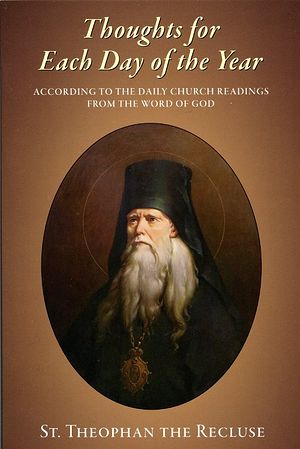
Thoughts for Each Day of the Year
According to the Daily Church Readings from the Word of God
By St. Theophan the Recluse
Wednesday. [II Cor. 9:12-10:7; Mark 3:20-27]
If a kingdom be divided against itself, that kingdom cannot stand. While single-mindedness for sinful evil is the quality within us, the kingdom of darkness and sin is strong in us; but when God’s grace attracts to itself the part of the spirit held captive by sin, freeing it from captivity, then there occurs a division within: sin on the one side, good on the other. As soon as a person unites his consciousness and freedom with good as a result of this awakening, sin loses all support and starts to decay. Constancy in the good intention taken on and patience in labours completely thwart sin and destroy it. Then begins the kingdom of good within, and it remains until some evil thought steals in, and, attracting the will to itself, once again brings about divisions. Just give entrance to the sinful stirring which has arisen, unite with it and set it in action, and again good will begin to weaken, and evil will grow, until it destroys the good entirely. This is the nearly continuous history of the inner life of those who are weak-hearted and do not have a strong disposition.