


| Previous day |    |
Next day |
| Old Style
June 10
|
Thursday |
New Style
June 23
|
| First Week after Pentecost (Fast-free period). Tone 7. |  Fast-free period.
|
 Hieromartyr Timothy, bishop of Prusa (ca. 361-363). Uncovering and translation of the relics of St. Basil, bishop of Ryazan (1609). Synaxis of the Saints of Ryazan. St. John, metropolitan of Tobolsk and all Siberia (1715). ynaxis of the Saints of Siberia.
Martyr Alexander and Virgin-martyr Antonina, at Crodamon (ca. 313). St. Theophanes, monk, and St. Pansemne, former harlot, of Antioch (369). St. Bassian, bishop of Lodi in Lombardy (409). St. Silouan of the Far Caves in Kiev (13th c.-14th c.). Blessed Cosmas, fool-for-Christ, of Verkhoturye (1706).
St. Asterius, bishop of Petra (4th c.). St. Canides, monk, of Cappadocia (ca. 460).
Repose of Elder Nahum of Solovki (1853), Schemamonk Sergius of Valaam (1860), and Schema-abbess Tamar (Mardzhanishvili) of the St. Seraphim–Znamensky Skete (1936).
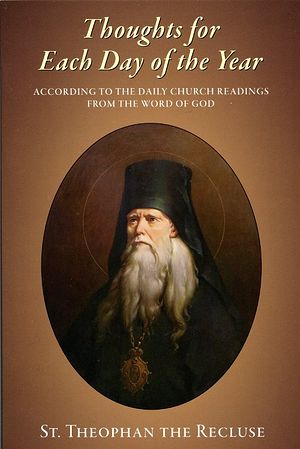
Thoughts for Each Day of the Year
According to the Daily Church Readings from the Word of God
By St. Theophan the Recluse
Thursday. [Rom. 1:28–2:9; Matt. 5:27–32]
Whosoever looketh on a woman … hath committed adultery with her already (Matt. 5:28). Living in society, one cannot help looking at women. What to do? A man does not commit adultery simply by looking at a woman, but by looking at her with lust. Look if you must, but keep your heart on a leash. Look with the eyes of a child—purely, without any evil thoughts. One must love women as well, for they are not excluded from the commandment about love of neighbour—but with love that is pure, which bears the soul and spiritual aspect in mind. Just as there is neither male nor female before God in Christianity, so it is in the mutual relations of Christians. But this is very difficult, you will say. Yes, it does not happen without a struggle; but struggle presupposes a lack of desire for evil. The Lord counts as purity the unlustful desire of the merciful.