


| Previous day | 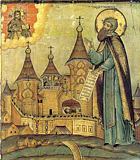
|
Next day |
| Old Style
April 20
|
Thursday |
New Style
May 3
|
| 4th Week after Pascha. Tone 3. |  No fast.
|
 St. Theodore Trichinas ('the Hair-shirt Wearer'), hermit, near Constantinople (400).
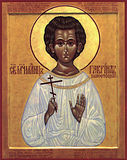
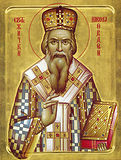
Blessed Anastasius I, patriarch of Antioch (599). St. Anastasius, abbot, of the monastery of St. Catherine at Sinai (695). St. Alexander, founder of Oshevensk Monastery (Arkhangelsk) (1479). Child-martyr Gabriel of Slutsk (Poland) (1690). Translation of the relics (1991) of St. Nikolai (Velimirovich), bishop of Ochrid and Zhicha (1956) from America to Serbia.
New Hiero-confessor Theodosius (Ganitsky), bishop of Kolomna (1937).
Apostle Zacchaeus of the Seventy, bishop of Caesarea in Palestine (1st c.). St. Theotimus, bishop of Tomis in Moesia (ca. 410). St. Caedwalla, king of the West Saxons (689). Hieromartyr Anastasius II, patriarch of Antioch (609). Sts. Athanasius (1380) and Ioasaph (1423) of Meteora, abbots. All Saints of Euboea.
Repose of Schemamonk Ignatius of St. Nicephorus Monastery in Olonets (1852).
Thoughts for Each Day of the Year
According to the Daily Church Readings from the Word of God
By St. Theophan the Recluse

Thursday. [Acts 10:34–43; John 8:12–20]
I am the light of the world: he that followeth Me shall not walk in darkness, but shall have the light of life (John 8:12) says the Lord. Consequently, he who turns away from the Lord, turns away from the light and is headed into darkness, and therefore he is a true obscurant.[1] You know what the teaching of Christ demands; and look: as soon as someone puts forth thoughts contrary to this teaching, do not fear calling him an obscurant; this is his real name. The Lord teaches that God is one in essence and three in persons: this is the ray of the supernatural light of truth. Whoever preaches the contrary is headed into darkness from the light, and he is an obscurant. The Lord teaches that God has three hypostases; and having created the world by His word, guides it through His providence. This is the Divine light, which illuminates the gloomy paths of our life, but not with an earthly, comforting light. He who preaches contrary to this is heading into dreary darkness—he is an obscurant. The Lord teaches that God created man according to His image and likeness and set him to live in paradise. When man sinned, God righteously drove him out of paradise to live on this earth, which is full of sorrows and want. However, He was not angered with him unto the end, but it was His good will to arrange salvation for him through the death on the cross of the incarnate Only-Begotten Son of God—and this is the spiritual light, illuminating the moral gloom that enshrouds our souls. He who preaches contrary to this is headed into darkness and is an obscurant. The Lord teaches. Believe, and upon receiving the power of grace in the Divine mysteries, live according to His commandments and you will be saved—this is the only way for the light of God to enter us and make us enlightened. He who teaches something to the contrary wants to keep us in darkness and therefore is an obscurant. The Lord teaches: enter in at the strait gate of a strict life of self-denial, and this is the only path to the light. Whoever is travelling the broad path of self-pleasure is headed into darkness, and is an obscurant. The Lord teaches: remember the last things: death, judgment, hell, heaven. This is a light that illuminates our future. Whoever teaches that death is the end of all casts darkness over our fate, and is thus an obscurant. Lovers of the light! Learn by this to distinguish where the darkness is, and depart from it.
[1] During St. Theophan’s time there was already much talk amongst “progressive” people about Christian “obscurantism.” The Orthodox faithful were often accused of “obscuring” the enlightenment of more progressive groups; i.e., they were called reactionaries.
Articles
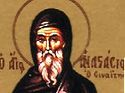 Venerable Anastasius the Abbot of SinaiSaint Anastasius of Sinai lived in the seventh century, and was one of the great ascetics who flourished on Mt. Sinai. |
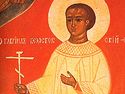 Childmartyr Gabriel of BialystokChild Martyr Gabriel of Bialystok was killed in Poland when he was only six years old. |
 Apostle ZacchaeusThe holy Apostle Zacchaeus was a rich publican at Jericho. |
 St. Theotimus the Bishop of Lesser ScythiaSaint Theotimus the Scythian was Bishop of Tomis in Scythia. He was a native of Dacia Pontica, and was part Roman. |