| Previous day | 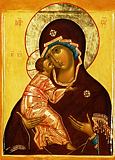
|
Next day |
| Old Style
May 21
|
Sunday |
New Style
June 3
|
|
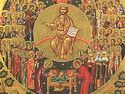
1st Sunday after Pentecost. Sunday of All Saints.
Tone 8.
Заговенье на Петров пост. |
 No fast.
|
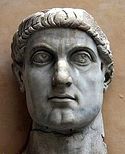
 Meeting of the Vladimir Icon of the Most Holy Theotokos (1521). Holy Equals-to-the-Apostles Emperor Constantine (337) and Helen, his mother (327).
  St. Constantine (Yaroslav) (1129). and his children Sts. Michael and Theodore, wonderworkers of Murom (12th c.). Uncovering of the relics of St. Andrew Ogorodnikov, fool-for-Christ, of Simbirsk (1998).
St. Cassian the Greek, monk, of Uglich (1504). Synaxis of the Saints of Simbirsk and Karelia. Synaxis of the New Hieromartyrs and Confessors of Ufa. St. Cyril, bishop of Rostov (1262). St. Basil, bishop of Ryazan (1295). Monk-martyr Agapitus, founder of Markushev Monastery (Vologda) (1584).
Hieromartyr Secundus and those with him, in Alexandria (356). St. Hospicius of Trier (581). St. Helen of Decani, Serbia (ca. 1350).
Repose of Elena Pavlova of Chepel, Kharkov (1885) and Elder Isaac of Dionysiou Monastery, Mt. Athos (1932).
Thoughts for Each Day of the Year
According to the Daily Church Readings from the Word of God
By St. Theophan the Recluse

Sunday of All the Saints. [Heb. 11:33–12:2; Matt. 10:32–33, 37–38; 19:27–30]
The Holy Church commemorates Saints every day. But because there have been God-pleasers who struggled in obscurity and were not revealed to the Holy Church, the Church has set a day on which we praise all those who have pleased God throughout the ages, that they all might be glorified by the Church. The Church instituted this commemoration immediately after the descent of the Holy Spirit, because all saints have been made and are being made saints by the grace of the Holy Spirit. The grace of the Holy Spirit brings repentance and the forgiveness of sins; it leads one into battle with the passions and lusts, and crowns this labor with purity and passionlessness. And thus a new creature appears, fit for a new heaven and new earth. Let us be zealous to follow the saints of God. Today’s Gospel reading teaches us how to do this: it demands fearless confession of faith in the Lord, particular love toward Him, raising the cross of self-denial, and heartfelt renunciation of everything. Let us place a beginning according to these instructions.
Articles
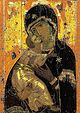
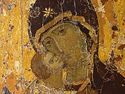
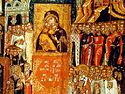 Meeting of the Vladimir Icon of the Mother of God in memory of the Saving of Moscow from the Invasion of Khan Achmed |