| Previous day | 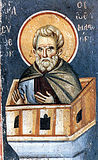
|
Next day |
| Old Style
May 24
|
Wednesday |
New Style
June 6
|
|
2nd Week after Pentecost.
Tone 8.
Fast of the Holy Apostles. |
 Wine and oil allowed.
|
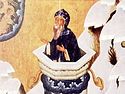
 St. Symeon Stylites (the Younger) of the Wonderful Mountain (596).
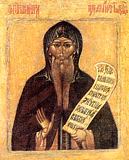
  St. Nicetas the Stylite, wonderworker, of Pereyaslavl-Zalesski (1186).
Martyrs Meletius Stratelates, Stephen, John, and 1,218 soldiers with women and children, including: Serapion the Egyptian, Callinicus the Magician, Theodore, Faustus, the women Marciana, Susanna, and Palladia, two children Cyriacus and Christian, and twelve tribunes: Faustus, Festus, Marcellus, Theodore, Meletius, Sergius, Marcellinus, Felix, Photinus, Theodoriscus, Mercurius, and Didymus—all of whom suffered in Galatia (ca. 218). St. Gregory, archbishop of Novgorod (1193).
Nun-martyr Martha, abbess, of Monemvasia (990). Translation of the relics of St. George of the Holy Mountain and Georgia (ca. 1067).
Repose of Monk Cyriacus of Valaam (1818) and Blessed Amphilochius of Rostov (1824).
Thoughts for Each Day of the Year
According to the Daily Church Readings from the Word of God
By St. Theophan the Recluse

Wednesday. [Rom. 4:13–25; Matt. 7:21–23]
Not everyone that saith unto me, Lord, Lord, shall enter into the kingdom of heaven; but he that doeth the will of my Father which is in heaven (Matt. 7:21). You will not be saved through prayer alone; you must unite with prayer fulfilment of the will of God—all that lies upon each person according to his calling and way of life. And prayer should have as its subject primarily the request that God enable us not to depart in any way from His holy will. Conversely, he who is zealous to fulfil God’s will in all things has boldness in prayer before God and greater access to His throne. Moreover, prayer that is not accompanied by walking in God’s will is often not true, sober and heartfelt prayer, but only external reading, during which one’s moral dysfunction is concealed by a multitude of words like a mist, while the thoughts are actually disorderly and wandering. Both must be made orderly through piety, and then there will be fruit.
Article