ORTHODOX CHRISTIANITY Orthodox Calendar
Orthodox Calendar 2021
Previous day
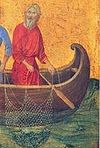
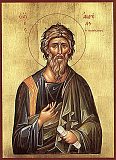
Апостол Андрей Первозванный
Next day
Old Style
November 30
Monday
New Style
December 13
26th Week after Pentecost. Tone 8.
Nativity Fast.
Wine and oil allowed.

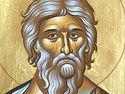
Совершается служба с полиелеемHoly and All-Praised Apostle Andrew the First-Called (62).

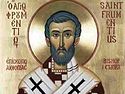
St. Frumentius, archbishop of Abyssinia (380).

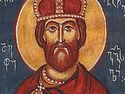
Sts. Peter I (5th c.) and Samuel I (5th-6th c.), catholicoses of Georgia. St. Vakhtang Gorgasali, king of Georgia (502). St. Tudwal, bishop in Wales and Brittany (6th c.). St. Andrew (Saguna), metropolitan of Transylvania (1873). St. Elias, schemamonk of Valaam and Verkhoturye (1900). St. Alexander, bishop of Methymna on Lesbos.

Thoughts for Each Day of the Year
According to the Daily Church Readings from the Word of God
By St. Theophan the Recluse

St. Theophan the Recluse

Monday. [II Tim. 2:20-26; Luke 19:37-44]

           The people cry out: “hosanna!”—while the Lord weeps. Does not something similar occur at our church celebrations? In those days, there was a solemn resemblance; but the Lord looked at what was in the souls invisibly, and saw it to be worthy of weeping. For us also, the holiday is always visibly festive; but is everyone’s inner mood this way? One has no understanding at all of the power and meaning of holidays; another gropingly feels something darkly, but sees nothing clearly; while another remains almost unnoticed, but his feeling and mood are worthy of the festive occasion. Our holidays take many sacrifices. But how many of them are intended for the Lord and one’s brothers and sisters? Either none, or the most insignificant bit; one’s belly and vain rushing around take almost all. This cannot be concealed from the Lord, and it is not surprising if, to speak in a human way, He weeps when we utter festive exclamations. These are those redeemed, justified, adopted as sons!…They gave a promise, took on an obligation to walk in the spirit and not commit fleshly lusts, while here what goes on among them? The sons of the Kingdom are worse than the basest slaves!…

Articles
The Astonishing Missionary Journeys of the Apostle Andrew

Nun Nectaria (McLees), George Alexandrou

The most important thing is that these puzzle pieces – the separate local traditions of Bulgaria, Romania, Ethiopia, of the Aramaic people, the Syrians, the Copts, even the Greek and Roman church traditions all fit together, but you have to follow them step by step to recreate his life. Finally, I had only one piece that I couldn’t fit, even as a possibility: the Declaration of Arbroath, the fourteenth-century Scottish declaration of independence from England which says that the Scots were taught the Christian faith by St. Andrew himself. Historians dismiss this, but I have to point out that his presence there was not physically impossible.

The Astonishing Missionary Journeys of the Apostle Andrew

Nun Nectaria (McLees), George Alexandrou

After the dormition of the Mother of God, St. Andrew began his final journey from Jerusalem. The trail of tradition says that he went back to Pontus, then to Georgia, to the Caucuses, and to the Sea of Azov in southern Russia. From there he went to Donets, to the Crimea, up the Dnepr River to Kiev and to the Scythians of the Ukraine. In the Crimea, where he stayed with the Greeks of Sebastopol and Cherson, we know that there were first-century Christian communities organized by St. Andrew himself. From the Crimea and Kiev in the Ukraine, he would have gone north by river to what is now Moscow, to Novgorod and then to Lake Ladoga (Valaam).

The Astonishing Missionary Journeys of the Apostle Andrew

Nun Nectaria (McLees)

Also, he had a sense of humor. For example, some of the sources say that when he first saw the saunas of the Slavs in what is now Novgorod he wrote letters to friends saying, “These Slavs are such strange people; they torture themselves with birch branches.” He was laughing about it. You cannot imagine him as a master of strictness. He was a humorous man, very humble, very easy. As a Mediterranean person he was surprised by these strange traditions. Of course, he was also a man who had seen many things.

Homily on the Day of the All-Praised Apostle Andrew the First Called. Man’s true, Eternal Riches

St. John of Kronstadt

This is what it means to possess all things. Truly, having nothing on earth and no passionate attachment to anything earthly, the Apostles possessed everything—all spiritual riches, all spiritual power; all spiritual consolation. They counted everything earthly as rubbish, dust, and vanishing smoke, because they had God Himself living in them, working countless miracles through them and saving through them a countless multitude of people.

Unremitting zeal for the preservation of the grace of the Holy Spirit. Instruction on November 30, the feast of the Apostle Andrew the First-Called

Bishop Vissarion (Nechaev)

Today we celebrate the memory of the Holy Apostle Andrew the First-Called. This Apostle means very much to the Russian Church. There is tradition that says that during the course of his apostolic journeys, he reached the hills of Kiev and erected a cross there, blessed the people, and pronounced a prophecy: “On these hills will shine forth the grace of God, and a great city will be created here, and the Lord will raise up many churches in it.”

St. Andrew the First-Called Apostle

Nathan Duffy

After following Christ during His earthly ministry, beholding Him after His resurrection, and receiving the Holy Spirit at Pentecost, St. Andrew heeded Our Lord’s commandment to preach the Gospel in all the world and baptize the nations in a most literal and spectacular fashion.

The Moment We Were First Called

Rev. Dr. J. Sergius Halvorsen

No matter where he was, no matter what he was doing, no matter how dark or cold, he needed to look no further than his own heart, for as St. Paul says, “God’s love has been poured into our hearts through the Holy Spirit.” (Rom 5.5) Filled with that love, Andrew saw the image of God in everyone he met. He saw the image of God in the poor, the angry, the sick, the despairing, the lonely, the stranger. It was this love of God that allowed him to rejoice and give thanks even as he offered his life as a martyr.

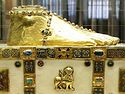
The “Trier Sandal” of Apostle Andrew

Anatoly Kholodiuk

According to tradition, holy Empress Helen brought to Trier the sandal worn on the right foot of the Apostle Andrew the First-Called.

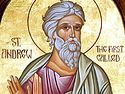
Apostle Andrew, the Holy and All-Praised First-Called

The Holy Apostle Andrew the First-Called was the first of the Apostles to follow Christ, and he later brought his own brother, the holy Apostle Peter, to Christ.

St. Frumentius the Archbishop of Abyssinia, Ethiopia

With the blessing of Saint Athanasius, Frumentius was elevated to become Bishop of Abyssinia and he returned to that country, which had sheltered him from his childhood.

St. Vakhtang Gorgasali, King of Georgia

The holy and right-believing king Vakhtang I ascended the throne of Kartli at the age of fifteen.
© ORTHODOX CHRISTIANITY