| Previous day | 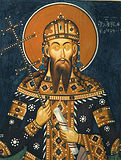
|
Next day |
| Old Style
December 2
|
Wednesday |
New Style
December 15
|
|
26th Week after Pentecost.
Tone 8.
Nativity Fast. |
 Monastic rule: cooked food, no oil.
|
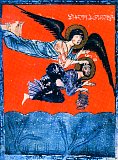
 Prophet Habakkuk (Abbacum) (7th c. b.c.).
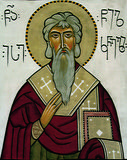
Martyr Myrope of Chios (251). Sts. John, Andrew, Heraclemon, and Theophilus, hermits, of Egypt (4th c.). St. Jesse (Ise), bishop of Tsilkani in Georgia (6th c.). St. Athanasius “the Resurrected,” recluse of the Kiev Caves, whose relics are in the Near Caves (1176). St. Athanasius, recluse of the Kiev Caves, whose relics are in the Far Caves (1264). St. Stephen-Urosh V, king (1371), and his mother St. Helen, of Serbia.
New Hieromartyrs Danax (Kalashnikov), hieromonk, of Arkhangelskoye (Moscow), Cosmas (Magda), hieromonk, of Milyatino (Moscow), Nicholas Vinogradsky, archpriest, of Mikhailovskoye (Moscow), John Derzhavin, archpriest, of Kamenka (Moscow), Nicholas Zabolotsky, archpriest, of Nekrasovo (Moscow), Sergius Kudryavtsev, archpriest, of Khvalynsk (Saratov), and Vladimir Profersansov and Nicholas Safonov, archpriests, of Mozhaisk (1937).
St. Cyril of Philea (1110). St. Solomon, archbishop of Ephesus. St. Ioannicius of Devic (Serbia) (1430).
Repose of Elder Luke “the Guestmaster,” of Valaam Monastery (1965).
Thoughts for Each Day of the Year
According to the Daily Church Readings from the Word of God
By St. Theophan the Recluse

Wednesday. [II Tim. 4:9-22; Luke 20:1-8]
The priests, scribes and elders did not believe in the Lord. In order to raise them up to faith He offered them a question: the baptism of John, was it from heaven, or of men? Reason about this without bias and your reasoning will bring you to faith. What is said about John’s appearing can be said about every event accompanying the Lord’s coming in the flesh, and about His very coming, and all that comes into contact with it. Let each person reason about all of this—the conclusion will be the same: “truly this was the Son of God.” Various thoughts can come, confusion can arise, what seems like incongruities can be encountered; but at the end of all investigations one universal conviction will come: that it is impossible to think any other way than as is shown in the Gospels and apostolic writings. Great is the mystery of godliness: God is manifest in the flesh (I Tim. 3:16).This remains a mystery, but it will be clear to the mind according to the moral necessity which the mind’s own investigation will apply to itself—to confess this way, and in no other way. Unbelievers either do not investigate at all as they ought, or they investigate superficially, with a mind alien to it, or they accept a wretched frame of mind that is opposed to what faith would require. The most insignificant refutation of the faith is enough for them, in order to justify their unbelief. The words of unbelievers shake believers, because believers are satisfied with simple faith, and do not seek clarification of the foundations of faith. Those words take them unawares; that is why they are shaken.
Articles
 Prophet HabakkukThe Holy Prophet Habakkuk, the eighth of the Twelve Minor Prophets, was descended from the Tribe of Simeon, and he prophesied around 650 B.C. |
 Martyr Myrope of ChiosThe Holy Martyr Myrope was born in the city of Ephesus at the beginning of the third century. |
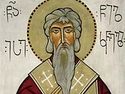 St. Jesse, Bishop of Tsilkani in GeorgiaSaint Jesse of Tsilkani arrived in Georgia in the 6th century with the other Syrian fathers and companions of Saint John of Zedazeni. |