| Previous day | 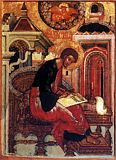
|
Next day |
| Old Style
October 18
|
Thursday |
New Style
October 31
|
| 19th Week after Pentecost. Tone 1. |  No fast.
|
 Holy Apostle and Evangelist Luke (1st c.).
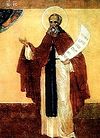
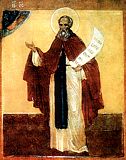
  St. Joseph, founder of Volokolamsk (Volotsk) Monastery (1515).
Martyr Marinus the Elder, at Anazarbus (4th c.). St. Julian the Hermit, of Mesopotamia (4th c.). St. Dionysius the Greek, archbishop of Rostov and Yaroslavl (1425). St. David, abbot, of Serpukhov (1520).
New Hieromartyrs Andrew Voskresensky, archpriest, of Karpovo (Moscow) and Nicholas Sokolov, archpriest, of Krymskoye (Moscow) (1937).
Hieromartyr Mnason, bishop of Cyprus (1st c.). Sts. Symeon, Theodore (monks), and Euphrosyne, who found the Icon of the Mother of God in the Great Cave of the Peloponnese (9th c.). New Martyrs Gabriel and Cirmidol, of Egypt (1522). St. Peter of Cetinje, metropolitan of Montenegro (1830).
Slaying of Jose Muñoz-Cortes (in monasticism Monk Ambrose), guardian of the myrrh-streaming “Montreal” Iveron Icon of the Theotokos (1997).
Thoughts for Each Day of the Year
According to the Daily Church Readings from the Word of God
By St. Theophan the Recluse

Thursday. [Col. 4:2-9; Luke 9:49-56]
How should one relate to unbelievers who do not confess the Lord? The same way as the Lord related to the village that did not receive Him. Youthful zeal, full of heat, would want to send down fire from heaven on them; but the Lord Himself restrains it: Ye know not what manner of spirit ye are of… The Lord and Saviour did not do anything to those who did not receive Him, though receiving Him is what salvation itself consists of; but passing them by, He went to another village, leaving them to themselves. The same applies now: let unbelievers go their way, and believers go theirs. God exists, Who will sort everyone out in good time. It is necessary to pity and pray for them; one must desire that they know the truth and try to find opportunities to hint to them about it; but when they openly start attacking the truth, give them a rebuff which is loving and yet brings them to their senses—and that is enough.
Articles