


| Previous day | 
|
Next day |
| Old Style
March 14
|
Thursday |
New Style
March 27
|
|
4th Week of Great Lent.
Tone 6.
Great Lent. |
 Monastic rule: xerophagy (bread, uncooked fruits and vegetables).
|
 St. Benedict of Nursia, abbot (543).
St. Euschemon, bishop of Lampsacus (9th c.). St. Rostislav-Michael, great prince of Kiev (1167). St. Theognostus, metropolitan of Kiev and Moscow (1353). St. Andrew, abbot, of the Holy Trinity Monastery in Rafailovo, Siberia (1820).
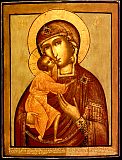
Icon of the Most Holy Theotokos of St. Theodore (“Feodorovskaya”) (Kostroma) (1613).
Martyr Eustathius and his company, at Carrhae, Mesopotamia (741). St. Matilda of Ringelheim (968).
Repose of Blessed John, fool-for-Christ, of Yurievets (1893).
Thoughts for Each Day of the Year
According to the Daily Church Readings from the Word of God
By St. Theophan the Recluse

Thursday.
He that spareth his rod hateth his son: but he that loveth him chasteneth him betimes (Prov. 13:24). Never mind the children—let us work on ourselves. For each of us this means the following: do not spare yourself, chasten yourself earnestly. Self-pity is the root of all our crawling into sin. He who does not indulge himself is always steadfast in good. Most of all you must keep your flesh, that slow-witted slave, in the strictest discipline. When you tire the flesh, it is humble; but give it only a small privilege, and already it begins to show its claws and to rage with passion-loving eyes. But what is amazing is that no matter what is said, everyone stands up for the flesh, and invents all sorts of pleasing things for it. Even science, it seems, would not move forward without this. What sort of science is this?
Articles

 St. Theognostus the Metropolitan of Kiev and All RussiaSaint Theognostus the Greek succeeded Saint Peter as Metropolitan of Moscow and All Russia, holding this office from 1327 until 1353. |
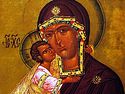 Icon of the Mother of God of St TheodoreThe Theodore—Kostroma Icon of the Mother of God was painted by the Evangelist Luke and resembles the Vladimir Icon of the Mother of God. |