| Previous day | 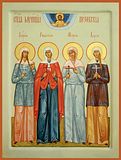

|
Next day |
| Old Style
August 5
|
Monday |
New Style
August 18
|
|
11th Week after Pentecost.
Tone 1.
Успенский пост. |
 Monastic rule: xerophagy (bread, uncooked fruits and vegetables).
|
 Forefeast of the Transfiguration.
  Martyr Eusignius of Antioch (362).
Hieromartyrs Antherus (236) and Fabian (250), popes of Rome. Martyr Pontius, at Cimella in Gaul (ca. 257). Righteous Nonna, mother of St. Gregory the Theologian (374). Monk-martyr Job the Gorge-dweller, on the Mezen River (Solovki) (1628). Martyrs Cantidius, Cantidian, and Sibelius, of Egypt (4th c.).
New Martyrs Eudocia Sheikova, Daria Timagina, Daria Ulybina, and Maria of Diveyevo, novices, at Puzo (1919). New Hieromartyr Simon (Shleyev), bishop of Ufa (1921).
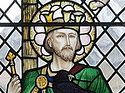
Martyr Oswald, king of Northumbria (642). St. Euthymius, patriarch of Constantinople (917). New Martyr Christos of Preveza, at Kos (1668). St. Eugenius, monk, of Anatolia (1682). Uncovering of the relics of St. Arsenius the New, of Paros (1967).
Thoughts for Each Day of the Year
According to the Daily Church Readings from the Word of God
By St. Theophan the Recluse

Monday. [II Cor. 2:4-15; Matt. 23:13-22]
Woe unto you…for ye shut up the Kingdom of Heaven against men. This is said to the chief priests, who neither teach the people themselves the saving path, nor compel the priests to do it; this is said also to priests who leave the people in neglect, not taking care to explain to them what is necessary for the salvation of the soul. From this the people remain in blindness, and one part remains in the certainty that it is going properly; the other, though it notices that things are not going the right way, does not go where it should, because it does not know how and where to go. This causes various silly ideas to spread among the people; this is why schismatics, molokans and khlysts[1] find acceptance among them, and this is how every evil teaching finds convenient access to them. A priest usually thinks that in his parish everything is fine, and rushes into action only when this evil has already spread and come to light. But then it is too late do anything about it. A priest must consider it the first priority of his conscience to continually instruct the adults in the knowledge of the Christian faith, and to prepare the young generation from their first conscious years, explaining to them what they can and must know. There is no need to wait for school. This must be done orally, gathering the children in the church and at home on Sunday evenings, or whenever and however it is convenient.
[1] Schismatics refer to the Old Believers, and Molokans and Klysts were Russian sects.
Tuesday. [II Cor. 2:14-3:3; Matt. 23:23-28]
Cleanse the inner so the outer will be clean. Our outer behaviour in society is almost always proper—we fear the judgment of people and restrain ourselves. If outwardly we give ourselves over to vices, it is already a most serious affair; it means that all shame is lost. But when one’s visible behaviour is proper, the inner tenor of thoughts and feelings is not always proper. Here self-pleasure is given complete freedom which is outwardly complied with as far as human eye can bear it and as far as it can hide its deeds from human sight. This is precisely a whited sepulchre. Furthermore, inner uncleanness makes what is on the outside unclean. Cleanse yourself inwardly, and then the exterior will become clean, and you will be all clean, you will be made a vessel which is fit for all good uses of a householder. One must marvel at how the inside remains neglected; for indeed, nobody wants perdition. Truly the enemy keeps such a soul in a blindness—[he says] that there is no problem as long as there are no obvious sins, or he teaches the soul to put off this important thing until tomorrow. “Tomorrow we will work seriously on ourselves, as one ought; but now let my soul take some pleasure in passionate thoughts and dreams, if not deeds.” Let us be on our guard that we might not grow old in such a frame of mind, so that correction for us will not become impossible, like teaching an old man new things.
Article