| Previous day | 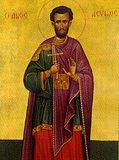
|
Next day |
| Old Style
August 17
|
Saturday |
New Style
August 30
|
| 12th Week after Pentecost. Tone 2. |  No fast.
|
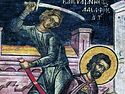
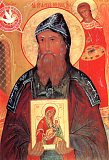
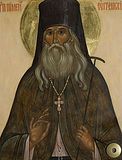
 Afterfeast of the Dormition. Hieromartyr Myron, priest, of Cyzicus (250). St. Pimen, archimandrite, of Ugresh (1880).
Martyrs Thyrsus, Leucius, and Callinicus (Coronatus), with others, of Bithynia (249-251). Martyr Patroclus of Troyes (Gaul) (270-275). Martyrs Paul and his sister Juliana, and Quadratus, Acacius, and Stratonicus, at Ptolemais in Syria (ca. 273). Martyrs Straton, Philip, Eutychian, and Cyprian, of Nicomedia (ca. 303). St. Alypius the Iconographer, of the Kiev Caves (ca. 1114). St. Leucius, founder of the Dormition Hermitage (Volokolamsk) (1492). Blessed Theodoretus, enlightener of the Laps (Solovki) (1571). St. Philip, monk, of Yankov (Vologda) (1662).
New Hieromartyr Dimitry Ostroumov, archpriest, of Fedosino (Moscow) (1937).
“Svensk” and “Armatia” Icons of the Most Holy Theotokos (1288).
Monk-martyr Macarius of Mt. St. Auxentius (768). Hieromartyr Jeroen, hieromonk, at Noordwijk (Neth.) (857). St. Elias the Younger, of Calabria (903). St. Tbeli Abuseridze of Khikhuni, Adjara (13th c.). New Monk-martyr Agapius, at Thermes, near Thessalonica (1752). New Monk-martyr Demetrius the Vlach, of Samarina (Pindos), at Ioannina (1808).
Repose of Schemanun Ardaliona of Ust-Medveditsky Convent (1864) and Schemamonk Onuphrius of Valaam (1912).
Thoughts for Each Day of the Year
According to the Daily Church Readings from the Word of God
By St. Theophan the Recluse

Saturday. [I Cor. 1:26-29; Matt. 20:29-34]
The two blind men of Jericho cry out, and the Lord returns their sight to them. But could these blind men have been the only ones in those places? Of course not. Why did these receive vision, but not the others? Because those did not cry out; and they did not cry out because they did not have hope; they did not have hope because they did not please God; they did not please God, because they had little faith. When true faith comes to man, he begins to please God from that very moment; with pleasing God hope comes hope, and from all of this comes prayer, compelling every help from above. Such people meet no refusal. They know both how to ask, in fact know that they should ask, they understand the limits to their asking, and they have patient persistence in prayer. All of this is indispensably necessary for success, for prayer by itself has feeble wings.
Article