| Previous day | 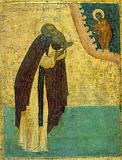

|
Next day |
| Old Style
August 30
|
Friday |
New Style
September 12
|
|
14th Week after Pentecost.
Tone 4.
Fast Day. |
 Wine and oil allowed.
|
 Sts. Alexander (340), John the Faster (595), and Paul the New (784), patriarchs of Constantinople. Repose of St. Alexander, founder of Svir Monastery (1533).
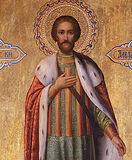
  Translation of the relics of St. Alexander Nevsky (Alexis in schema), great prince of Novgorod (1724). Uncovering of the relics of St. Daniel, great prince of Moscow (1652).
St. Christopher of Palestine (6th c.). St. Fantinus of Calabria (9th c.-10th c.). Synaxis of Serbian Hierarchs: Sts. Sava I (1235), Arsenius (1266), Sava II (1269), Eustathius I (1285), James (1292), Nicodemus (1325), and Daniel II (1338), archbishops; Sts. Ioannicius II (1354), Ephraim II (1395), Spyridon (1388), Cyril (1419), Nicon (ca. 1439), Macarius (1574), and Gabriel I (1659), patriarchs; and St. Gregory, bishop (1012). St. Alexander, founder of Voch Monastery, near Galich (14th-15th c.). St. Barlaam, metropolitan of Moldavia (1657).
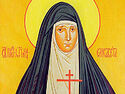
Virgin-Martyr Elisaveta (Yarigina) (1937). New Hieromartyr Ignatius (Lebedev), schemaarchimandrite, of the Vysokopetrovsky Monastery (Moscow) (1938). New Hiero-confessor Peter Cheltsov, archpriest, of Smolensk (1972).
St. Bryaene of Nisibis (318). St. Sarmata of Egypt (ca. 362). St. Eulalius, bishop of Cyprus (4th c.). St. Fiacrius (Fiacre), Irish hermit and hospice-founder at Breuil in Brie (ca. 670). St. John of Rasca and Secu, bishop of Roman, Moldavia (1685). 16 Monk-martyrs of Thebes. Six Martyrs of Melitene.
Thoughts for Each Day of the Year
According to the Daily Church Readings from the Word of God
By St. Theophan the Recluse

Friday. [Gal. 2:6-10; Mark 5:22-24, 35-6:1]
Having resurrected the daughter of Jairus, the Lord charged her parents straitly, that no man should know it. Thus are we commanded: do not seek glory, and do not train your ear for human praises, even if your deeds are of such a nature that it is impossible to hide them. Do what the fear of God and your conscience urge you to do, and behave as though such talk did not exist. Look after your soul—as soon as it inclines the slightest degree in this direction, return it to its place. A desire for people to know is provoked by a desire for praise. When there is praise the goal is achieved; but this undermines one’s energy and suppresses the praiseworthy activity, and consequently suppresses the continuation of praise. Thus, one who wants people to know of his good deeds is his own betrayer. It is a good thing for people to praise what is good—for why wouldn’t someone praise what is good? But do not keep this in your thoughts; do not expect it and do not seek it. Indulge yourself in this and you will be totally spoiled. One indulgence leads to another. Increasing the frequency of the same deeds turns them into a habit, and you will be a lover of praise. When you come to that point, then not all of your deeds will be praiseworthy, and praise will cease. Because you lack praise from others, you will begin to praise yourself, and this is what the Lord called sounding a trumpet before oneself. This is even worse. The soul then becomes petty, and chases solely after tinsel. Do not expect true good to come from such a soul.
Articles
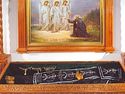
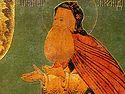
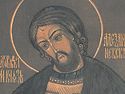 Translation of the relics of St Alexander NevskyVeneration of the Prince began right at his burial, where a remarkable miracle took place. |
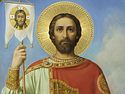
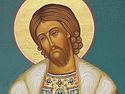
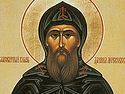
 Right-believing Prince Daniel of MoscowHoly Prince Daniel of Moscow was born at Vladimir in the year 1261. He was the fourth son of St Alexander Nevsky. |