| Previous day | 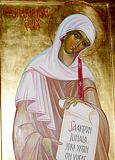
|
Next day |
| Old Style
September 3
|
Tuesday |
New Style
September 16
|
| 15th Week after Pentecost. Tone 5. |  No fast.
|
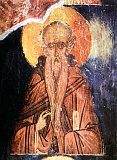
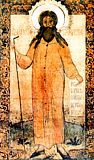
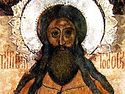
 Hieromartyrs Anthimus, bishop of Nicomedia, and Theophilus, deacon, and Martyrs Dorotheus, Mardonius, Migdonius, Peter, Indes, Gorgonius, Zeno, Domna (virgin), and Euthymius (302). St. Theoctistus of Palestine, fellow-faster with St. Euthymius the Great (467). Blessed John “the Hairy,” fool-for-Christ, of Rostov (1580).
St. Phoebe, deaconess, at Cenchreae, near Corinth (1st c.). Hieromartyr Aristion (Kelladion), bishop of Alexandria (ca. 167). Martyr Basilissa of Nicomedia (309). St. Ioannicius II, first patriarch of Serbia (1354).
New Hieromartyrs Pimen (Belolikov), bishop of Vernensk, and Meletius (Golokolosv), hieromonk of the Issyk-Kul Holy Trinity Monastery (Kyrgyzstan) (1918).
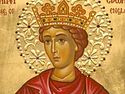
St. Constantine the New, emperor of Byzantium (641). St. Aigulphus of Provence (Gaul) (676). St. Remaclus, bishop of Maastricht (677). St. Edward, martyr and king of England (978). New Martyr Polydorus of Leucosia (Cyprus), at New Ephesus (1794).
Repose of Priest Peter, fool-for-Christ, of Uglich (1866).
Thoughts for Each Day of the Year
According to the Daily Church Readings from the Word of God
By St. Theophan the Recluse

Tuesday. [Gal. 2:21-3:7; Mark 6:1-7]
From whence hath this man these things? and what wisdom is this which is given unto him? Thus spoke the people of Nazareth about the Lord, having known His former life of low estate. The same happens with everyone who truly follows the Lord. He who strictly holds to the path of the Lord changes completely once he has labored to overcome all that is not right within himself. His whole constitution—his gaze, walk, speech, and behaviour all bear the mark of particular harmony and dignity, though he may have come from a lowly background, and has no education. It is then heard, “From whence hath this man these things?” If things that are bodily and visible are so transformed, what can be said of the inner things, of the soul, which are more directly and closely subject to the action of transforming grace, and to which the externals serve only as an expression and consequence? How bright, exact and determined are his thoughts about everything! How true is his judgment about what exists and occurs! His viewpoint on everything is higher than that of philosophers! And his intentions, actions and undertakings? All is pure, holy, reflecting heavenly brightness. In truth, this is a new person! He has not received an education, has not heard lectures in universities, and has no [illustrious] upbringing at all, and yet he is most well-mannered and wise. Attentiveness toward oneself, labour over oneself, prayer and drawing near to God refashioned everything through God’s grace; and nobody saw how it happened. That is why the question arises, “From whence hath this man these things?”
Articles
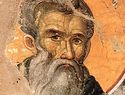 Venerable TheoctistusSaint Theoctistus of Palestine was a great ascetic who lived in the Judean wilderness in the Wadi Mukellik. |
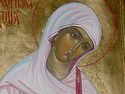 St. Phoebe the Deaconess at Cenchreae near CorinthSaint Phoebe the Deaconess is mentioned by the holy Apostle Paul. |
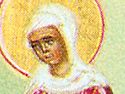 Martyr Basilissa of NicomediaThe Martyr Basilissa of Nicomedia suffered for her faith in Christ under the emperor Diocletian. |