| Previous day | 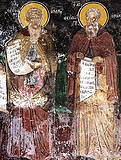
|
Next day |
| Old Style
September 22
|
Sunday |
New Style
October 5
|
| 17th Sunday after Pentecost. Tone 8. |  No fast.
|
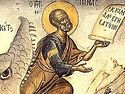
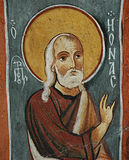
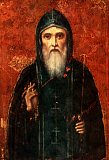
 Prophet Jonah (8th c. b.c.). Hieromartyr Phocas, bishop of Sinope (117). St. Jonah the Presbyter (9th c.), father of Sts. Theophanes the Hymnographer and Theodore Graptus. Blessed Parasceva (“Pasha of Sarov”), fool-for-Christ, of Diveyevo (1915).
Martyr Phocas the Gardener, of Sinope (320). St. Peter of Constantinople, tax collector in Africa (6th c.). St. Jonah, founder of the Yashezersk Annunciation Monastery (Karelia) (1589-1592). St. Macarius, founder of Zhabyn Monastery (Belev) (1623). Hieromartyr Theodosius of Brazi Monastery, metropolitan of Moldavia (1694). Synaxis of the Saints of Tula.
New Hieromartyr Benjamin (Voskresensky), bishop of Romanov (1931).
Icon of the Most Holy Theotokos “She Who Is Quick to Hear.”
Martyrs Maurice and the Theban Legion, including the officers Candidus and Exuperius, at Agaunum (Gaul) (ca. 287). Hieromartyr Emmeram, bishop in Gaul, at Regensburg (Bavaria) (652). 26 Martyrs of Zographou Monastery, Mt. Athos, martyred by the Latins (see October 10th) (1284). St. Cosmas, desert-dweller of Zographou, Mt. Athos (1323). Sts. Daniel, hieromonk, and Misael, monk, of Turnu Monastery (Romania) (early 17th c.).
Repose of Abbot Innocent of Valaam (1828).
Thoughts for Each Day of the Year
According to the Daily Church Readings from the Word of God
By St. Theophan the Recluse

Eighteenth Sunday After Pentecost. [II Cor. 9:6-11; Luke 5:1-11]
The fishermen toiled for an entire night and took nothing; but when the Lord entered their ship, and, after preaching commanded them to cast their net, they took so many that they could not pull them out and the net broke. This is an image for all work without God’s help, and for work with God’s help. When one person works, wanting to achieve something through his strength alone—he is all thumbs. When the Lord draws near to him, then one good thing after another flows in from somewhere. In the spiritual-moral sense the impossibility of success without the Lord is tangibly visible: Without Me ye can do nothing, said the Lord. And this law acts in all things. Just as a branch not grown onto a tree not only does not bear fruit, but dries up and loses its life as well, neither can people bring forth fruits of truth valuable for eternal life if they are not in living communion with the Lord. Any good that they might have is only an appearance of good, but in essence it is faulty—like a forest apple that appears red but if you taste it, it is sour. It is also tangibly clear in an external, worldly sense: one struggles and struggles, and all in vain. When God’s blessing descends, all comes out well. Those who are attentive toward themselves and the paths of life know these truths through experience.
Articles