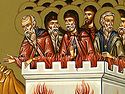
Martyrs Eulampius and Eulampia and 200 martyrs with them, at Nicomedia (303-311).
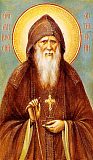
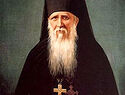
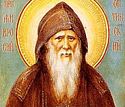
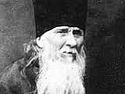
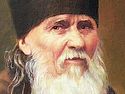
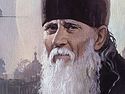
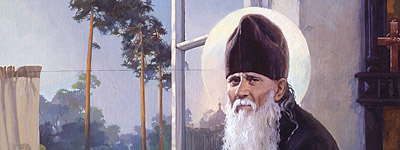
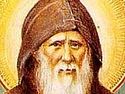
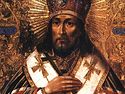
  St. Ambrose, elder, of Optina Monastery (1891). St. Innocent, bishop of Penza (1819).
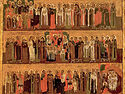
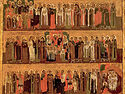
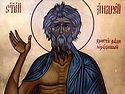
Martyr Theotecnus of Antioch (3rd-4th c.). St. Bassian of Constantinople (ca. 458). St. Theophilus the Confessor, of Bulgaria (716). Blessed Andrew of Totma (Vologda), fool-for-Christ (1673). Sts. Stephen (1094) bishops of Vladimir in Volhynia; and Amphilochius (1122), St. Yaropolk-Peter, prince of Vladimir in Volhynia (1086); St. Theodore (in monasticism Theodosius) of the Kiev Caves, prince of Ostrog in Volhynia (1483); St. Juliana, princess of Olshansk (ca. 1540); St. Job, abbot and wonderworker of Pochaev (1651); and Hieromartyr Macarius of Kanev, archimandrite, of Obruch and Pinsk (1678). Synaxis of the Saints of Volhynia:
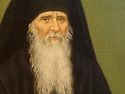
New Hieromartyr Theodore (Pozdeyevsky), archbishop of Volokolamsk (1937).
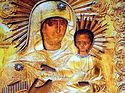
Zographou Icon of the Most Holy Theotokos “Of the Akathist.”
St. Pinytus, bishop of Knossos on Crete (2nd c.). Martyrs of the Theban Legion, along the Rhine: Sts. Cassius and Florentius, at Bonn; Sts. Gereon and companions, at Cologne; and Sts. Victor and companions, at Xanten (Germany) (ca. 287). St. Paulinus, archbishop of York (644). St. Agilbert, bishop of Paris (ca. 680). Martyrdom by the Latins of the 26 Martyrs of Zographou Monastery on Mt. Athos: Abbot Thomas, Monks Barsanuphius, Cyril, Micah, Simon, Hilarion, Job, James, Cyprian, Sabbas, James, Martinian, Cosmas, Sergius, Paul, Menas, Ioasaph, Ioannicius, Anthony, Euthymius, Dometian, and Parthenius, and four laymen (1284).
Repose of Schemamonk Theodore, desert-dweller of Valaam (1834).
Thursday. [Col. 1:24-29; Luke 9:7-11]
Hearing about the works of Christ the
Saviour, Herod said, “John I beheaded; but who is
This?”—and he desired to see Him. He desired
to see Him and sought an opportunity for this, but was not
made worthy, because he sought not unto faith and
salvation, but out of empty curiosity. Inquisitiveness is
the tickling of the mind; truth is not the road to it, but
news, especially sensational news. That is why it is not
satisfied with the truth itself, seeks something
extraordinary in it. When it has contrived something
extraordinary, it stops there and attracts other people to
it. In our days, it is the German mind that does this. The
Germans are obsessed with contriving things. They covered
the whole realm of the truth of God with their
contrivances as with a fog. Take dogma, ethics, history,
the word of God—all are so overloaded with
contrivances that you cannot get to the truth of God.
Meanwhile, these things interest them and those who have
the same mindset. The truth of God is simple; need a proud
mind be occupied with it? It would be better off
contriving its own things. This is sensational, although
empty and weak like a spider’s web. To see that it
is so, look at the current theories of the creation of the
world: they are like a somnambulistic or drunken delirium.
And yet how good they seem to those who thought of them!
How much energy and time are wasted on this—and all
in vain! The deed was accomplished simply: He spake and
it came to be. He commanded and it was created. Nobody
can think up anything better than this solution.