


| Previous day | 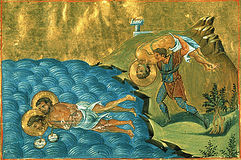
|
Next day |
| Old Style
October 21
|
Monday |
New Style
November 3
|
| 22nd Week after Pentecost. Tone 4. |  No fast.
|
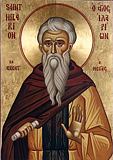
 St. Hilarion the Great, of Gaza (371-372). Translation of the relics of St. Hilarion, bishop of Meglin, Bulgaria (1206).
Martyrs Dasius, Gaius, and Zoticus, at Nicomedia (303). St. Hilarion, metropolitan of Kiev. Sts. Theophilus and James, monks of Konevits, founders of Dormition Monastery at Omutch (Pskov) (ca. 1412). St. Hilarion, founder of Pskovoezersk Monastery (Gdov) (1476).
New Hieromartyrs Paulinus (Kroshechkin), archbishop of Mogilev, and Arcadius (Yershov), bishop of Ekaterinburg, and with them Anatole Levitsky and Nicander Chernelevsky, priests, and New Martyr Cyprian Annikov (1937). New Hieromartyr Damian (Voskresensky), archbishop of Kursk (1937). New Hieromartyrs Constantine Chekalov, Sergius Smirnov, Basil Kozyrev, Theodore Belyaev, Vladimir Vvedensky, Nicholas Raevsky, John Kozyrev, Basil Nikolsky, Alexander Bogoyavlensky, Demetrius Troitsky, and Alexis Moskvin, priests, and Sergius Kazansky and John Melnitsky, deacons, all of the Tver diocese (1937). New Hieromartyr Alexis (Bui), bishop of Voronezh (1930). New Hieromartyrs Neophytus (Osipov), archimandrite, of Moscow, and Sophronius (Nesmeyanov), hieromonk, of Lozeva (Tver) (1937).
Hieromartyr Socrates, priest, and Martyr Theodote, of Ancyra (ca. 230). St. Ursula and her companions, martyrs at Cologne (beg. of 4th c.). St. Wendolinus (Wendel) of Trier (c. 617). St. Fintan Munnu of Teachmunnu (Ireland) (635). The 63 Martyrs of Jerusalem: Pegasus, Neophytus, Acacius, Dorotheus, Stephen, Dometius, Herman, Dionysius, Epiphanius, Stratonicus, Leontius, Emmanuel, Theophilus, Elias, John, Samuel, Eulampius, Alexius, Photius, Eutrepius, Methodius, Chariton, Theophylactus, Anastasius, Andronicus, Symeon, Theoktistus, Romanus, Paul, Agathonicus, Minas, Athanasius, Jacob, Nicephorus, Porphyrius, Timothy, Irenarchus, Auxentius, Joseph, Gregory, Callinicus, Aaron, Cyriacus, Theodosius, Eustathius, Isaac, Alexander, Eleutherius, Adrian, Christophor, Antiochus, Isidore, Parthenius, Sergius, Euplus, Ignatius, Theophanes, Cyril, Zachariah, and Anthimus (724). St. Malathgeny of Cluain-Edneach (Ireland) (767). Translation of the relics of St. Christodulus the Wonderworker, of Patmos (1093). St. Philotheus of Neapolis and Mt. Athos (14th c.). Sts. Bessarion (Sarai), hieromonk (1745), and Sophronius of Ciorara, monk (ca. 1765), confessors, and St. Oprea of Salistie (18th c.), martyred by the Latins in Romania. New Martyr John of Monemvasia, at Larissa (1773). Hiero-confessors John of Gales, and Moses (Macinic), priests, of Sibiel (Transylvania) (18th c.).
Repose of Schema-archimandrite Herman (Bogdanov) of New Valaam Monastery in Siberia (1938) and Schemanun Seraphima (Bobkova) of Shamordino Convent (1990).
Thoughts for Each Day of the Year
According to the Daily Church Readings from the Word of God
By St. Theophan the Recluse

Monday. [I Thess. 1:1-5; Luke 10:22-24]
No man knoweth…who the Father is, but the Son, and he to whom the Son will reveal him. The Son was on the earth and revealed everything necessary for us Himself and through the Holy Spirit which acted in the apostles. Consequently, what you find in the Gospels and the apostolic writings is all you will and can know about the Father and Godly things. Do not seek more than this, and do not think to find apart from this anywhere else the truth about God and God’s plans. What a great treasure we possess!… Everything has been said already. Do not rack your brains, just accept with faith what has been revealed. It has been revealed that God is one in essence and triune in persons—the Father, Son and Holy Spirit; accept this with faith and uphold it. It has been revealed that the thrice-hypostatical God created all through the word, preserves all in His right hand, and is providential toward everything; accept this with faith and uphold it. It has been revealed that we were in a blessed state and fell, and that for our restoration and redemption the Son of God, the second person of the Most Holy Trinity, was incarnate, suffered, died on the cross, was resurrected and ascended into heaven—accept this with faith and uphold it. It has been revealed that one who desires to be saved must believe in the Lord, and accepting divine grace in the holy mysteries, live, with its help, according to the Lord’s commandments, struggling with the passions and lusts, by means of corresponding spiritual endeavours—accept this with faith and do it. It has been revealed that whosoever lives according to God’s direction enters after their death into bright dwelling places, the pre-beginning of eternal bliss; while whosoever does not live thus, upon death will pre-begin to experience the torments of hell—accept this [revelation] with faith and thus give yourself understanding, and inspire yourself for good and spiritual endeavours. Thus accept all with faith and keep it faithfully. There is no need to rack your brains over your own invented things. Do not listen to those who show off their intelligence—they do not know where they are going.
Tuesday. [I Thess. 1:6-10; Luke 11:1-10]
The Lord gave a common prayer for everyone, combining in it all of our needs, spiritual and bodily, inner and outer, eternal and temporal. But since it is impossible to include everything which one has to pray to God about in life in only one prayer, a rule is given after the common prayer for private requests about something: Ask, and it shall be given you; seek, and ye shall find; knock, and it shall be opened unto you. So it is done in the Church of God: Christians pray in common about common needs, but each privately sets his own needs and requirements before the Lord. We pray in common in churches according to established rites, which are nothing other than the Lord’s Prayer which has been explained and presented in various ways; while privately, at home, everyone asks the Lord about his own things in whatever way he can. Even in church one can pray about one’s own concerns, and at home one can pray with a common prayer. We must concern ourselves about only one thing: that when we stand at prayer, at home or in church, we have true prayer in our soul, true turning and lifting up of our mind and heart to God. Let everyone do this as he is able. Do not stand like a statue, and do not mutter the prayers like a street organ wound up, playing songs. As long as you stand like that, and as long as you mumble the prayers, you are without prayer, the mind wandering and the heart full of vain feelings. If you already stand in prayer and are adjusted to it, is it difficult for you to draw your mind and heart there as well? Draw them there, even if they have become unyielding. Then true prayer will form and will attract God’s mercy, and God’s promise to prayer: ask and it will be given, it will be fulfilled. Often it is not given because there is no petition, but only a posture of petitioning.
Articles
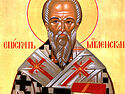
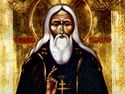
 Saint Hilarion, Metropolitan of KievSaint Hilarion, priest of the prince’s village of Berestovo near Kiev, was the spiritual Father and companion of Prince Yaroslav. |
 Venerable Theophilus and Jacob, Abbots of Omutch, PskovSaint Theophilus and James, Abbots of Omutch in Pskov, lived the ascetic life on the island of Konev together with Saint Arsenius (June 12). |
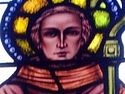 Venerable Fintan Munnu, Abbot of Taghmon in IrelandDmitry LapaSt. Fintan is venerated in both Ireland and Scotland where churches dedicated to him are to be found in various regions. |
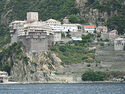 Venerable Philotheus of Dionysiou of Mount AthosSaint Philotheos of Dionysiou Monastery on Mount Athos was a native of Elateia, and was born in 1526. |