


| Previous day | 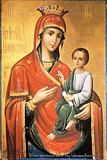
|
Next day |
| Old Style
November 9
|
Saturday |
New Style
November 22
|
| 24th Week after Pentecost. Tone 6. |  No fast.
|
 Martyrs Onesiphorus and Porphyrius, of Ephesus (284-305). St. Matrona, abbess, of Constantinople (492). St. Theoctista of the isle of Lesbos (881).
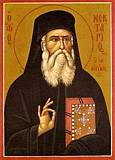
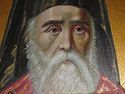
Martyr Alexander of Thessalonica (ca. 305). Martyr Anthony of Apamea (5th c.). St. John the Short, of Egypt (ca. 407). Sts. Eustolia (610) and Sosipatra (625), of Constantinople. St. Onesiphorus the Confessor, of the Kiev Caves (1148). St. Nectarius (Kephalas), metropolitan of Pentapolis (1920).
New Hieromartyrs Parthenius (Bryansky), bishop of Ananyevsk, Alexis (Zadvornov), hieromonk, of the Afanasiev Convent (Yaroslavl), Paul Ansimov, archpriest, of Moscow, Nestor Panin and Theodore Chichkanov, archpriests, of Semipalatinsk, Dimitry Rusinov, archpriest, of Boyarkino (Moscow), and Elijah Rylko, archpriest, of Ilinskoye (Moscow) (1937).
 Icon of the Most Holy Theotokos “She Who Is Quick to Hear” of Docheiariou, Mt. Athos (10th c.).
Martyrs Claudius, Castor, Sempronian, and Nicostratus, of Pannonia (ca. 306). St. Benen (Benignus), bishop of Armagh (468). St. Symeon Metaphrastes, of Constantinople (960). Sts. Euthymius (990) and Neophytus (ca. 1118), of Docheiariou, Mt. Athos. St. Iakovos (Tsalikis), elder, of Euboia (1991).
Repose of Righteous Eldress Matrona of Penza (1937) and Elder Macarius (Mordovtsev), fool-for-Christ, of Novopskov and Starobelsk (1981).
Thoughts for Each Day of the Year
According to the Daily Church Readings from the Word of God
By St. Theophan the Recluse

Saturday. [Gal. 1:3-10; Luke 9:37-43]
After coming down from the mount of the Transfiguration, the Lord heals a youth possessed with a devil. A reproach for unbelief preceded the healing, as the reason why the misfortunate one was not healed by the disciples. Whose unbelief this was—whether of the father who brought his son, of the people who gathered together, or perhaps of the Apostles—it is seen only that unbelief closes the doors to God’s merciful intercession and help, whereas faith opens it. The Lord said to the father: as much as you can believe, so you will receive. Faith is not just a matter of thought and mind, when it relates to a person, but embraces the entire essence of man. It is a mutual obligation of the believer and the One in Whom he believes, though it might not be expressed literally. He who believes counts on the one he believes in for everything, and does not expect a refusal from him in anything. That is why he turns to him with undivided thought, like to a father, goes to him as to his treasure chamber, with the surety that he will not return empty. Such an attitude inclines without words the one towards whom this attitude is held. This is how it is with people. But the power of dispositions is truly manifest when they are directed toward the Lord, Who is almighty, omniscient and desires to give us every good; and a true believer’s expectations are never betrayed. If we do not have something, and do not receive it when we ask for it, it is because we do not have the proper faith. First and foremost we must seek and introduce in our heart complete faith in the Lord, seek and obtain it of Him through our entreaties, for it comes not from us, but is God’s gift. When faith was required from the father of the youth, he prayed: “Lord, I believe; help thou mine unbelief.” He believed weakly, wavering, and prayed about the strengthening of faith. But who can boast of such perfect faith as his, and who, therefore, does not need to pray, “Help, O Lord, mine unbelief?” If only the full force of faith were in us, our thoughts would be pure and feelings holy, and deeds God-pleasing. Then the Lord would heed us like a father his children; and no matter what comes to our heart—and what would come to a person in this state could only be pleasing to the Lord—we would receive everything without refusal or delay.
Articles
 Martyrs Onesiphorus and Porphyrius, of EphesusThe Holy Martyrs Onesiphorus and Porphyrius of Ephesus suffered during the persecution against Christians by the emperor Diocletian (284-305). |
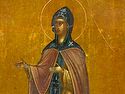 Venerable Matrona the Abbess of ConstantinopleSaint Matrona, Abbess of Constantinople was born in the city of Perge Pamphylia (Asia Minor) in the fifth century. |
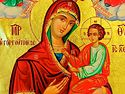 Icon of the Mother of God “Quick to Hear”The Icon of the Mother of God, “Quick to Hear” an ancient wonderworking icon, is located on Holy Mount Athos at the Dochiariou monastery. |