


| Previous day | 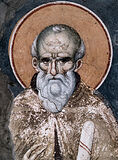
|
Next day |
| Old Style
January 21
|
Tuesday |
New Style
February 3
|
| Fast-free Week. Tone 1. |  No fast.
|
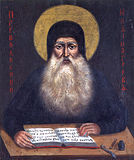
 St. Maximus the Confessor (662). Martyr Neophytus of Nicaea (303-305). Martyrs Eugene, Candidus, Valerian, and Aquila, at Trebizond (3rd c.-4th c.). St. Maximus the Greek, monk, of Russia (1556).
Virgin-martyr Agnes of Rome (ca. 305). Martyr Anastasius, disciple of St. Maximus the Confessor (662). St. Timon, monk, of Nadeyev and Kostroma (1840).
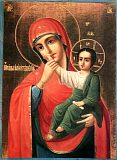
“Paramythia” Icon of the Most Holy Theotokos (807), at Vatopedi (Mt. Athos).
Hieromartyrs Fructuosus, bishop of Catalan (Spain), and with him deacons Augurius and Eulogius (259). St. Zosimas, bishop of Syracuse (662). Synaxis of the Church of Holy Peace by the Sea, Constantinople. St. Callistratus, catholicos-patriarch of Georgia (1952).
Thoughts for Each Day of the Year
According to the Daily Church Readings from the Word of God
By St. Theophan the Recluse

Monday (33rd). [I Pet. 2:21–3:9; Mark 12:13–17]
The Apostle now points out to us the hidden man of the heart (I Pet. 3:4) as the object of our most careful concern and care. We are to adorn ourselves through the formation of this man within ourselves. What is this hidden man of the heart? It is that man which forms in the heart when only good dispositions and feelings come to dwell therein. Examine these dispositions and feelings, and you will see the face of the man hidden in the heart. Here are those dispositions! As His divine power hath given unto us all things that pertain unto life and godliness (II Pet. 1:3), and on your part, giving all diligence, writes Saint Peter, add to your faith virtue; and to virtue knowledge; and to knowledge temperance; and to temperance patience; and to patience godliness; and to godliness brotherly kindness; and to brotherly kindness love (II Pet. 1:5–7). In a similar fashion Saint Paul lists the inner good dispositions of the Christian heart: The fruit of the Spirit is love, joy, peace, longsuffering, gentleness, goodness, faith, meekness, temperance (Gal. 5:22–23). Also: Put on therefore, as the elect of God, holy and beloved, bowels of mercies, kindness, humbleness of mind, meekness, longsuffering ... and above all these things put on love, which is the bond of perfectness. And let the peace of God rule in your hearts (Col. 3:12–15). Bring together all of these goods into one spiritual body with its various members, and you will see the divinely beautiful face of the hidden man of the heart. You must fervently establish the same in your own heart.
Monday (34th). [II Pet. 1:20–2:9; Mark 13:9–13]
The fear of God leads to the beginning of a holy and God-pleasing life and is its most faithful guardian, when one follows the inspiration of the fear of God and makes such a beginning. The present Epistle reading teaches us this, bringing to mind the threatening judgements of God and the punishment shown already here of those who do not submit to His will. He, it says, spared not the angels that sinned (II Pet. 2:4). They were pure, and dwelt in a most radiant habitation. But as soon as they sinned, they were cast down into the nethermost darkness. Will He spare you and me, if we go against His will?! Impiety overflowed in the days of Noah. God brought upon them a flood, and destroyed them all, except for eight souls of the family of Noah. He did not take into account that there were many people. Will He deliberate over you alone, whether to destroy you or not, when you do not to listen to His voice?! For a long time the Lord spared Sodom and Gomorrah. But instead of coming to their senses, they rushed to the height of impiety. Therefore, they were struck by fire when they did not expect it. This fire is an image of the eternal fire, which awaits the impious. Neither will you escape this fire, if you walk the same path as they. Bring all of this to mind when sitting by yourself, especially in the silence and darkness of night; and thus arousing a fear of God, fear sin, for in it the flame of eternal fire stealthily approaches you.
Tuesday. [II Pet. 2:9–22; Mark 13:14–23]
If any man shall say to you, Lo, here is Christ; or, lo, he is there; believe him not (Mark 13:21). Christ the Lord, our Saviour, having established upon the earth the holy Church, is well pleased to abide in it, as its head, enlivener, and ruler. Christ is here, in our Orthodox Church, and He is not in any other church. Do not search for Him elsewhere, for you will not find Him. Therefore, if someone from a non-orthodox assemblage comes to you and begins to suggest that they have Christ—do not believe it. If some one says to you, “We have an apostolic community, and we have Christ,” do not believe them. The Church founded by the Apostles abides on the earth—it is the Orthodox Church, And Christ is in it. The community established only yesterday cannot be apostolic, and Christ is not in it. If you hear someone saying, “Christ is speaking in me,” while he shuns the [Orthodox] Church, does not want to know its pastors and is not sanctified by the Sacraments, do not believe him. In him is not Christ, but rather another spirit appropriating the name of Christ in order to divert people from Christ the Lord and from His holy Church. Neither believe anyone who suggests to you even some small thing alien to the [Orthodox] Church. Recognize all such people to be instruments of seducing spirits and preachers of lies.
Articles
 St. Maximus the ConfessorSaint Maximus the Confessor was born in Constantinople around 580 and raised in a pious Christian family. |
 Martyr Neophytus of NiceaThe Holy Martyr Neophytus, a native of the city of Nicea in Bithynia, was raised by his parents in strict Christian piety. |


 Virginmartyr Agnes of RomeWhen she refused to enter into marriage with the son of the city official Symphronius, one of his associates revealed to him that Agnes was a Christian. |

 Icon of the Mother of God “Comfort” or “Consolation”The Vatopedi “Comfort” or “Consolation” Icon of the Mother of God is in the old Vatopedi monastery on Athos, in the church of the Annunciation. |
 The “Otrada”—Consolation IconThe Icon known as the “Otrada”, or ‘Consolation”, icon is in the Vatopedi Monastery on Mt. Athos, which had been established during the reign of Constantine the Great. |
 St. Fructuosis of Tarragona, SpainSaint Fructuosis lived during the persecution of Valerian and Gallienus in the third century, during the consulship of Amelianus and Bassus. |