


| Previous day | 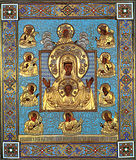
|
Next day |
| Old Style
March 8
|
Saturday |
New Style
March 21
|
|
4th Week of Great Lent. Fourth Saturday of Great Lent. Commemoration of the Dead.
Tone 7.
Great Lent. |
 Wine and oil allowed.
|
 St. Theophylactus, bishop of Nicomedia (842-845).
Apostle Hermas of the Seventy (1st c.). Hieromartyr Theodoretus, priest, of Antioch (361-363). Sts. Lazarus, founder (1391) and Athanasius, monk (15th c.), of Murmansk Monastery (Karelia). St. Andronicus (Lukash), schema-archimandrite of Tbilisi, Georgia, elder of Glinsk Monastery (1974).
“Kursk Root” Icon of the Sign of the Most Holy Theotokos (1898).
St. Senan of Scattery Island, monastic founder (ca. 544). St. Felix of Burgundy, bishop of Dunwich and enlightener of East Anglia (ca. 648). St. Julian, archbishop of Toledo (690). St. Paul the Confessor, bishop of Plousias in Bithynia (ca. 840). St. Tarasius the Wonderworker, of Lycaonia.
Repose of Blessed Basiliscus of Uglich (1863) and Archbishop Vitaly (Maximenko) of Eastern America (1960).
Thoughts for Each Day of the Year
According to the Daily Church Readings from the Word of God
By St. Theophan the Recluse

Friday.
The souls of the righteous are in the hand of God (Wisdom 3:1). But in whose hand are the souls of sinners? The Saviour said to the apostles that satan seeks to sift them like wheat, that is, he seeks to knock them from the right path, to take them into his hands and do with them what he wants. That is why everyone turning away from the Lord is in the hands of satan, and he sifts them and casts them wherever he desires. Due to this the heads of sinners are constantly spinning, because the enemy, dragging them here and there, does not give them a chance to come to their senses. As soon as the enemy notices that someone is starting to have second thoughts, he starts to shake him even more strongly, so that his head again becomes clouded and his thoughts become scattered.
Saturday. [Heb. 6:9–12; Mark 7:31–37]
Flesh and blood cannot inherit the Kingdom of God (I Cor. 15:50). Consequently, to receive the kingdom it is necessary to become fleshless and bloodless—that is, to become steadfast in such a nature of life wherein blood and flesh literally do not exist. This is attained by a complete renunciation of deeds that come from flesh and blood. Now the works of the flesh are manifest, which are these; Adultery, fornication, uncleanness, lasciviousness, idolatry, witchcraft, hatred, variance, emulations, wrath, strife, seditions, heresies, envyings, murders, drunkenness, revellings, and such like. Having listed all of these, the Apostle adds: I tell you before, as I have also told you in time past, that they which do such things shall not inherit the Kingdom of God (Gal. 5:19–21). He that has ears to hear, let him hear (cf. Matt. 11:15)!
Articles

 Apostle Hermas of the SeventyThe Holy Apostle Hermas of the Seventy was bishop at Philippopolis, and died a martyr in the first century. |
 Hieromartyr Theodoritus of AntiochSaint Theodoritus was a presbyter and keeper of sacred vessels at the cathedral church in Antioch. |

 Venerable Athanasius of MuromSaint Athanasius was igumen at the monastery of Saint Lazarus during the mid-fifteenth century. |

 Icon of the Mother of God “Kursk-Root”The Kursk Root Icon of the Mother of God “Of the Sign” is one of the most ancient icons of the Russian Church. |

 Saturday of the Commemoration of the DeadSaturday of the Commemoration of the Dead |