| Previous day | 
|
Next day |
| Old Style
May 17
|
Saturday |
New Style
May 30
|
| 7th Week after Pascha. Commemoration of the Dead. Tone 6. |  No fast.
|
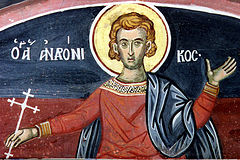
 Apostle Andronicus of the Seventy and his fellow laborer St. Junia (1st c.).
Martyrs Solochon, Pamphamer, and Pamphalon, soldiers, at Chalcedon (284-305). St. Stephen the New, patriarch of Constantinople (893). St. Eudocia, in monasticism Euphrosyne, princess of Moscow (1407). St. Andronicus the Gravedigger, monk of the Zverinets Monastery (Kiev) (1096). St. Jonah Atamansky, archpriest, of Odessa (1924). Translation of the relics of St. Adrian, founder of Ondrusov Monastery (Karelia) (1551).
Sts. Nectarius (1550) and Theophanes (1544), of Meteora. Great-martyr Nicholas of Sofia (1555). St. Athanasius the New, bishop and wonderworker of Christianopolis (1735).
Thoughts for Each Day of the Year
According to the Daily Church Readings from the Word of God
By St. Theophan the Recluse

Saturday. [Acts 28:1–31; John 21:15–25]
Nobody is lazy in commemorating his own parents; but it is also necessary to commemorate all Orthodox Christians, and not only on this day, but at all times, in every prayer. We ourselves will be there, and will need this prayer like a poor person needs a piece of bread and a glass of water. Remember that prayer for those who have passed away is strong through its communality, in that it comes from the entire Church. The Church breathes prayer. Just as it is in nature, when during pregnancy a mother breathes and the strength she receives from this breath passes on to the child, so also in the order of grace, the Church breathes a prayer which is shared by all, and the power of the prayer passes on to those who have passed away, held in the bosom of the Church, which is made up of the living and the dead, the militant and the triumphant. Do not be lazy—zealously commemorate all of our departed fathers and brothers whenever you pray. It will be your alms for them.
Articles
 Apostle Andronicus of the SeventySaint Andronicus Apostle of the Seventy and Saint Junia were relatives of the holy Apostle Paul. They labored much, preaching the Gospel to pagans. |

 St. Stephen the Archbishop of ConstantinopleSaint Stephen, Patriarch of Constantinople, was the younger son of Emperor Basil the Macedonian, and was a brother of Emperor Leo the Wise. |


 St. Euphrosyne of Moscow: to Be a Princess Means to Serve Your Fatherland, God, and PeopleOlga SokirkinaSt. Euphrosyne became the only woman representative of Muscovy to be ranked among the saints. |