


| Previous day | 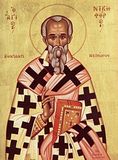
|
Next day |
| Old Style
June 2
|
Monday |
New Style
June 15
|
|
3rd Week after Pentecost.
Tone 1.
Fast of the Holy Apostles. |
 Monastic rule: xerophagy (bread, uncooked fruits and vegetables).
|
 St. Nicephorus the Confessor, patriarch of Constantinople (828).
  Great-martyr John the New, of Suceava, at Belgorod (Cetatea Alba) (1330-1340).
Hieromartyr Pothinus, bishop of Lyons (177). Martyrs Sanctus, Maturus, Attalus, Blandina, Biblis, Ponticus, Alexander, and others, at Lyon (ca.177). Uncovering of the relics of St. Juliana, princess of Vyazma (Novotorzhok) (1819). Right-believing Prince Andrew of Nizhegorod (1365).
St. Marinus of Constantinople, son of St. Mary the New, of Byzia (ca. 930). St. Odo, archbishop of Canterbury (959). St. Nicephorus, bishop of Milet (11th c.). New Martyr Demetrius of Philadelphia (1657). New Martyr Constantine the Hagarene, at Constantinople (1819). Hieromartyr Erasmus, bishop of Formia in Campania, and 20,000 martyrs with him (303).
Repose of Schema-archimandrite Zachariah of the St. Sergius Lavra (1936) and slaying of Monk Hariton of Holy Archangels Monastery (Kosovo) (1999).
Thoughts for Each Day of the Year
According to the Daily Church Readings from the Word of God
By St. Theophan the Recluse

Monday. [Rom. 7:1-13; Matt. 9:36-10:8]
Sending the holy apostles to preach, the Lord commanded them to call everyone, saying, The Kingdom of Heaven is at hand, that is the Kingdom has come—go to it. What ought we to preach? We should cry to all, “sons of the kingdom! Do not run from the kingdom into bondage and slavery,” because they are running. Some are captivated by freedom of mind. They say, “we don’t want the bonds of faith and oppression of authority, even Divine authority; we will figure things out and make up our minds for ourselves.” So they made up their minds. They built fables in which there is more childishness than in the mythology of the Greeks—and they magnify themselves… Others are enticed by the broad path of the passions. They say, “we don’t want to know positive commandments, nor the demands of conscience—this is all abstract: we need tangible naturalness.” And they have gone after it. What has come of it? They have bowed down before dumb beasts. Has not the theory that man originated from animals arisen from this moral fall? This is where they have gone! And everyone runs from the Lord, everyone runs…
Articles
 Translation of the relics of St Nicephorus the Patriarch of ConstantinopleIn the year 846 the holy relics of Patriarch Nicephorus were opened, and were found incorrupt and fragrant. |
 St. Nicephorus the Confessor the Patriarch of ConstantinopleSaint Nicephorus was a dignitary at the court of the Empress Irene (797-802). |

 St. Juliana the Princess of VyazmaSaint Juliana, Princess of Vyazma and Novy Torg, a daughter of the noble Maximus Danilov, was known for her virtues and her chastity. |