


| Previous day | 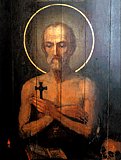
|
Next day |
| Old Style
July 18
|
Friday |
New Style
July 31
|
|
9th Week after Pentecost.
Tone 7.
Fast Day. |
 Wine and oil allowed.
|
 Martyr Emilian of Silistra in Bulgaria (363). Martyr Hyacinth of Amastris (4th c.).
St. Pambo, hermit, of Egypt (4th c.). St. John the Much-suffering, of the Kiev Caves (1160). St. Pambo, recluse, of the Kiev Caves (13th c.). St. Leontius, founder of Karikhov Monastery (Novgorod) (1492).
New Hieromartyr Apollinarius (Mosalitinov), hieromonk of the St. Nicholas Monastery (Verkhoturye) (1918).
“Tolga” (1314) and “Kaluga” (1748) Icons of the Most Holy Theotokos.
Great-martyr Athanasius of Klysma, Egypt (4th c.). St. Barlaam, ascetic, of Bald Mountain, near Antioch in Syria (6th c.). St. Arnulf (Arnold) bishop of Metz (640). St. Frederich, bishop of Utrecht (Neth.) (9th c.). Sts. Stephen, patriarch of Constantinople (928), and John the Confessor, metropolitan of Chalcedon (9th c.). Hieromartyr Cosmas, hieromonk, of Gareji, Georgia (1630).
Repose of Abbess Mavrikia (1867) and Abbess Zosima (1933), both of Goritsy Convent.
Thoughts for Each Day of the Year
According to the Daily Church Readings from the Word of God
By St. Theophan the Recluse

Friday. [I Cor. 14:26-40; Matt. 21:12-14, 17-20]
My House shall be called the house of prayer; but ye have made it a den of thieves. Everyone knows that a church calls for reverence, for a collecting of thoughts, for deep thinking about God, and for standing in the presence of God, but who fulfils this? People go to church with a desire to pray, to stand in it for a while with warm fervour; but then thoughts begin to wander, and bargaining begins in one’s head even louder than that which the Lord found in the Jerusalem temple. Why is this so? Because the way one stands in church is a reflection of one’s entire life. As people live, so do they behave in church. A church influences and somewhat supports spiritual movements; but then the usual course of one’s spiritual constitution takes over. Therefore if you want your time in church to consist of worthily standing in the face of the Lord, prepare for this in your ordinary life; walk, as much as you can, in a prayerful frame of mind. This labour will bring you to the point that in church also you will stand reverently all the time. This reverence will inspire you to be reverent in your ordinary life as well. Thus you will walk ever higher and higher. Say, “O Lord, help” —and begin!
Saturday. [I Rom. 14:6-9; Matt. 15:32-39]
The Lord filled the people accompanying Him miraculously another time to show that He is always ready to generously provide for people who believe. He could have done this every time as well; but He did not, in order to not break them from their usual way of life—established, maintained and supported by Him. Such is God’s general providence. The main, all-embracing actions of providence were accomplished in the beginning upon the arranging of all things; but having arranged everything and set it into motion, God did not tie Himself up in any way, but reserved for himself freedom to usher in extraordinary help when necessary. He acts like the master of a house, who establishes rules; however, while maintaining them, He does not bind himself with them, but relates to them authoritatively, with well-managed good intentions. Those who oppose the faith do not understand the meaning of God’s providence. Extending it in their thoughts beyond proper boundaries, and not seeing the realization of their ideas in reality, they deny this very providence. The providence which they demand definitely does not exist; but that providence which the Lord God is well pleased to establish and preserve unquestionably exists.
Articles
 Martyr Emilian of Silistria in BulgariaThe Holy Martyr Emilian, who was a Slav, suffered for Christ during the reign of Emperor Julian the Apostate (361-363) |
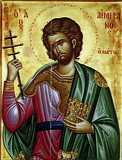
 Martyr Hyacinthus of AmastrideaThe Holy Martyr Hyacinthus was born into a pious Christian family in the city of Amastridea (now Amastra in Anatolia). |
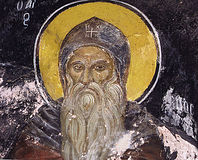
 Venerable Pambo the Hermit of EgyptSaint Pambo lived the ascetic life in the Nitrian desert in Egypt. |


