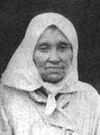
Nun Seraphima (Bulgakova)
“It is not wondrous that it has not reached 700 feet near my hut, but it is wondrous that my death will be like the death of the seven youths of Ephasus, who slept for three hundred years in the cave. Just as they arose in affirmation of the General Resurrection, so will I arise before the end [of the world] and lie down in Diveyevo. Diveyevo will not be named for the village Diveyevo, but for the worldwide wonder.”
Rating: 10|Votes: 4
The following descriptions of Diveyevo Convent before and after the Bolshevik revolution are remarkable in that they are the personal recollections of two nuns who were novices in the Convent before it was closed by the Communists.
Sergei Tsvetkov
Rating: 9|Votes: 1
The Tsar came back to his box immediately after the shooting. At that moment Stolypin appeared to remember something; he turned in his direction, made signs of the cross over the tsar's family and himself, and lost consciousness. Doctors present at the theatre were already running to him, among them, Profs. Rein, Chernov, Obolensky, Makovsky, surgeon Galin and Dr. Afanasyev. They stopped the bleeding and carried the wounded on a stretcher to the ambulance. At this moment Stolypin regained his consciousness and uttered: "Tell the Tsar that I am happy to die for him and for my Motherland."
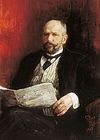
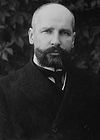
The following article describes the service and times of Petr Stolypin, Russia’s leading statesman in the period following the Revolution of 1905 and Prime Minister and Minister of Internal Affairs from 1906 to 1911, when he died from an assassin's bullet. His hapless murderer was but a tool in the hands of "the mystery of iniquity," which doth already work (2 Thess. 2:7). Stolypin, however, will be ever remembered as a dedicated public servant, with whom not all of his colleagues agreed, but who the people loved. He embodied that nobility of soul of which, perhaps, the present world is not worthy.
The role of the Church is to discourage divisions among the people, regardless of existent political affiliations, and make them feel more that they are one people of God. The Church does not act as a political institution, because she would be reduced to a mere ideology. It is rather obligated to encourage awareness among the people and their leaders that personal interests must not be above the interests of the community. Do not expect that others will understand and support us if we are not to be able to do that for one another.