If the pope called for the destruction of all the mosques in Europe, the uproar would be cataclysmic. Pundits would lambaste the church, the White House would rush out a statement of deep concern, and rioters in the Middle East would kill each other in their grief. But when the most influential leader in the Muslim world issues a fatwa to destroy Christian churches, the silence is deafening.
Rating: 10|Votes: 1
Yet, in this forgotten place of Africa, a man has dedicated his life to create a better future for hundreds of poor children. Father Antonios Mutyaba, together with his wife Charitini, and with the support of the Greek Orthodox Diocese of Kampala, is working hard to provide a chance in life for the children in Luweero.
Srdja Trifkovic
Both demographically and politically, the republic has a precarious present and an uncertain future.
Jivoin Rakocevic
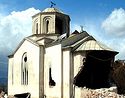
Never in the history of the Serbian Orthodox Church have more holy shrines suffered damage and destruction, so quickly and so massively, as on the days of March 17–18, 2004. Ethnic elemental forces literally “purged” the churches—famous frescoes perished, a huge number of priceless icons ended up in the black market, libraries with irreplaceable books were destroyed, and church bells ended their days in the hands of metal brokers…
Abbot of the Moscow Sretensky MonasteryArchimandrite Tikhon (Shevkunov)
Despite the enormous political and material hardships, the Serbian Church is caring for their people’s salvation. With its blessing, charitable organizations, medical centers, and free “people’s kitchens” are active in Kosovo. In these kitchens, people who have lost their jobs and food sources receive daily nourishment. No doubt it would be much safer to abandon these places and move to Central Serbia. But several thousand Serbian Christians remain in the homeland of their Orthodox ancestors, carrying on a daily ascetic struggle unknown and largely misunderstood by the world.