| Previous day | 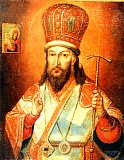
|
Next day |
| Old Style
October 28
|
Monday |
New Style
November 10
|
| 23rd Week after Pentecost. Tone 5. |  No fast.
|
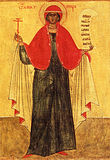
 Great-martyr Parasceva of Iconium (3rd c.).
  Martyrs Terence and Neonilla, of Syria, and their children Sarbelus, Photus, Theodulus, Hierax, Nitus, Bele, and Eunice (249). St. Stephen of St. Sabbas Monastery, hymnographer (807). St. Arsenius I of Srem, archbishop of Serbia (1266).
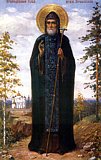
  Repose of St. Job, abbot and wonderworker of Pochaev (1651). St. Demetrius, metropolitan of Rostov (1709).
Martyrs Terence, Africanus, Maximus, Pompeius, and 36 others, at Carthage (250). Hieromartyr Cyriacus, chorepiscopus of Jerusalem, and his mother Martyr Anna (363). Hieromartyr Neophytus, bishop of Urbnisi, Georgia (7th c.). St. John the Chozebite, bishop of Caesarea in Palestine (532). Repose of St. Theophilus, fool-for-Christ, of Kiev (1853). St. Arsenius of Cappadocia (1924). St. Nestor (not the Chronicler) of the Kiev Caves (14th c.). Righteous Virgin Parasceva of Pirimin on the Pinega River (Arkhangelsk) (16th c.).
New Hieromartyr Gennadius (Parfentiev), archimandrite, of Yaransk (1919). New Hieromartyr Michael Lektorsky, archpriest, of Kuban (1920). New Hieromartyr Constantine (Dyakov), metropolitan of Kiev (1937).
Protection of the Mother of God.
St. Firmilian, bishop of Caesarea in Cappadocia (ca. 269), and St. Malchion, priest (late 3rd c.). St. Febronia, daughter of Emperor Heraclius (632). St. Athanasius I, patriarch of Constantinople (Mt. Athos) (1340). St. Hyacinth, metropolitan of Wallachia (1372). New Martyrs Angelis, Manuel, George, and Nicholas, at Rethymno on Crete (1824). New Hieromartyr Visarion (Toia) of Lainici Monastery, Romania (1951). St. Olga Michael of Kwethluk, Alaska (1979).
Repose of Elder Epiphanius (Theodoropoulos) of Athens (1989).
Thoughts for Each Day of the Year
According to the Daily Church Readings from the Word of God
By St. Theophan the Recluse

Monday. [I Thess. 2:20-3:8; Luke 11:29-33]
The queen of the south shall rise up in the judgement with the men of this generation, and condemn them. For what? For indifference to the work accomplished by the Lord before their eyes. That queen, upon hearing about Solomon’s wisdom, came from afar to hear him, but these men, having before their face the Lord Himself, did not heed Him, although it was obvious that He was higher than Solomon, as the sky is higher than the earth. And the queen of the south condemns everyone who is indifferent to God’s works, because the Lord always, even among us, is as obviously present in the Gospel accounts as He was then. Reading the Gospels we have before our eyes the Lord with all of His marvellous works, for they are as doubtless as the testimony of one’s own eyes. Meanwhile, what is more attentive to the Lord as that which is impressed upon our souls? We have closed our eyes or turned them the other way; this is why we do not see; and not seeing, we do not devote ourselves to works of the Lord. However, this is no excuse, but rather the reason behind our unheedfulness, which is as criminal as what comes from it. The work of the Lord is our top priority—that is, the salvation of the soul. Furthermore, we should heed what comes from the Lord even if it is not directly related to us; ever more so should we heed what is directed at us for the accomplishment of our essential work, the significance of which extends throughout eternity. Judge for yourselves how criminal it is to disregard such a matter!
Articles
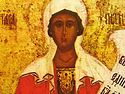 Greatmartyr Paraskeva of IconiumThe Great Martyr Paraskeva of Iconium, lived during the third century in a rich and pious family. |
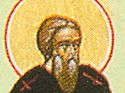
 Venerable Stephen the Hymnographer of St Sabbas MonasterySaint Stephen the Hymnographer of Saint Sava Monastery, lived the ascetic life at the Lavra of Saint Sava in Palestine |
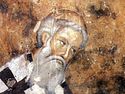 Repose of St Arsenius the Archbishop of SerbiaSaint Arsenius, Archbishop of Pec, was born in Srem. |
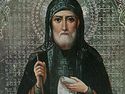
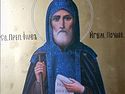 St. Job of Pochaev |
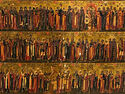
 Martyr Neophytus of Urbin, GeorgiaThe holy hieromartyr Neophytus of Urbnisi descended from a line of Persian fire-worshippers. |