


| Previous day | 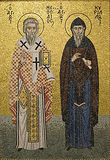   |
Next day |
| Old Style
May 11
|
Sunday |
New Style
May 24
|
| 7th Sunday of Pascha. Sunday of the Holy Fathers of the First Ecumenical Council. Tone 6. |  Fast-free period.
|
 Hieromartyr Mocius, priest of Amphipolis in Macedonia (ca. 295). Holy Equals-to-the-Apostles
  Methodius (885) and Cyril (869) first teachers of the Slavs Equal-to-the-Apostles Rostislav, prince of Greater Moravia (870).
St. Sophronius, recluse, of the Kiev Caves (13th c.). St. Nicodemus of Pec, archbishop of Serbia (1325). Hieromartyr Joseph, metropolitan of Astrakhan (1672). St. Theophylactus, bishop of Stavropol and Ekaterinodar (1872).
New Hieromartyr Alexander (Petrovsky), archbishop of Kharkov (1940).
Commemoration of the founding of Constantinople (330). St. Cathan of Bute, Scotland (6th c.). St. Asaph, bishop of Llanelwy, North Wales (ca. 600). St. Mayeul, abbot, of Cluny (994). New Martyrs Olympia, abbess, and Euphrosyne, nun, of Mytilene (1235). Martyr Acacius of Lower Moesia. Blessed Christesias, called Christopher, of Gareji, Georgia (1771). New Martyrs Dioscorus the New and Argyrus, of Thessalonica (1806).
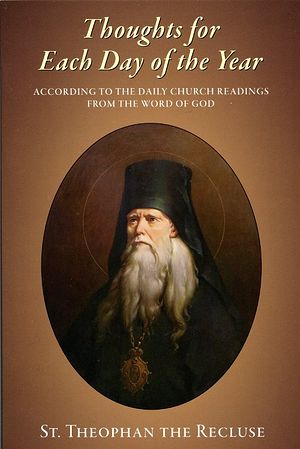
Thoughts for Each Day of the Year
According to the Daily Church Readings from the Word of God
By St. Theophan the Recluse
Sunday of the Holy Fathers. [Acts 20:16–18, 28–36; John 17:1–13]
Arias began to deny the divinity of the Son of God and His oneness in essence with God the Father. The entire Church rose up against him; all believers, from all ends of the earth, unanimously confessed that the Lord Jesus Christ is the Only-Begotten Son of God, true God of true God; begotten, not made, of one essence with the Father. One would think that this unanimity was purely coincidental, but this faith was then tried by fire when the authorities and powerful of this world began to side with the Arians. Neither fire, nor sword, nor persecution could extinguish this faith, and it was immediately found everywhere among everyone, as soon as the pressure from external powers ceased. This means that it makes up the heart of the Church and the essence of her confession. Glory be to the Lord, Who preserves this faith within us! For, as long as it exists, we are still Christians, though we may not live as such. If it ceases to exist, Christianity will end.