


| Previous day | 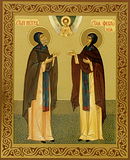  |
Next day |
| Old Style
June 25
|
Wednesday |
New Style
July 8
|
|
6th Week after Pentecost.
Tone 4.
Fast of the Holy Apostles. |
 Wine and oil allowed.
|
 Virgin-martyr Febronia of Nisibis (ca. 304).
  Holy Prince Peter and Princess Febronia (tonsured David and Euphrosyne), wonderworkers of Murom (1228).
St. Dalmatus, founder of the Dormition Monastery in Siberia (1697). St. Cyprian, hieromonk of Svyatogorsk Monastery (1874).
New Hiero-confessor Nikon (Belyaev), hieromonk of Optina Monastery (1931).
Virgin-martyrs Libya, Leonis, and Eutropa, of Palermo in Sicily (ca. 305). Martyr Gallicanus the Patrician, in Egypt (362). St. Moluac of Lismore (Scotland) (592). St. Adalbert, hierodeacon (Neth.) (740). Sts. Dionysius (ca. 1389) and Dometius (1405-1410) of Dionysiou Monastery, Mt. Athos. New Monk-martyr Procopius of Varna and Mt. Athos, at Smyrna (1810). New Martyr George of Attalia, at Krene in Asia Minor (1823).
Repose of Metropolitan Theoleptus of Philadelphia (1322) and Hierodeacon Serapion of Glinsk Hermitage (1859).
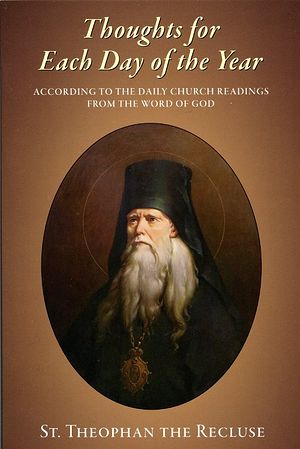
Thoughts for Each Day of the Year
According to the Daily Church Readings from the Word of God
By St. Theophan the Recluse
Wednesday. [I Cor. 2:9-3:8; Matt. 13:31-36]
The kingdom is like a grain of mustard seed and leaven. A small grain of mustard seed grows up into a big bush; leaven penetrates the whole lump of dough and makes it leavened. Here, on the one hand, is an image for the Church, which in the beginning consisted only of the apostles and several other people, then spread and became most numerous, penetrating all of humanity; on the other hand, it is an image of the spiritual life revealed in every person. Its first seed is the intention and determination to be saved through pleasing God, upon faith in the Lord and Saviour. This determination, no matter how firm, is like a tiny dot. In the beginning it embraces only one’s consciousness and activities; then from this all of the activity of a spiritual life develops. Its movement and strength multiply and mature within its own self, and it begins to penetrate all the powers of the soul—the mind, will, feelings, then fills them with itself, makes them leavened according to its spirit, and penetrates the entire constitution of the human nature, body, soul, and spirit in which it was engendered.