| Previous day | 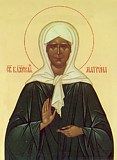
|
Next day |
| Old Style
April 19
|
Tuesday |
New Style
May 2
|
| 3rd Week after Pascha. Tone 2. |  No fast.
|
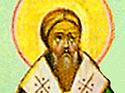
 St. John of the Ancient Caves in Palestine (8th c.).
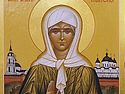
  St. Matrona the Blind, of Moscow (1952).
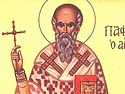
Martyrs Christopher, Theonas, and Antoninus, at Nicomedia (303). St. George the Confessor, bishop of Antioch in Pisidia (9th c.). St. Tryphon, patriarch of Constantinople (933). Hieromartyr Paphnutius of Jerusalem. St. Nicephorus, abbot, of Katabad. Uncovering of the relics of St. Joachim, founder of Opochka Monastery (Pskov) (1621).
New Hiero-confessor Victor (Ostrovidov), bishop of Glazov (1934).
Hieromartyr Perfectus, priest, at Cordoba (850). Hieromartyr Alphege, archbishop of Canterbury (1012). St. Symeon the Barefoot, of Philotheou Monastery, Mt. Athos (1594). New Monk-martyr Agathangelus of Esphigmenou, Mt. Athos, at Smyrna (1819). Martyrs Theodore of Perge in Pamphylia, his mother Philippa, and Dioscorus, Socrates, and Dionysius (2nd c.).
Repose of fool-for-Christ Asenetha of Goritsy (1892) and Hieroschemamonk Alexis of Valaam (1900).
Thoughts for Each Day of the Year
According to the Daily Church Readings from the Word of God
By St. Theophan the Recluse

Tuesday. [Acts 8:5–17; John 6:27–33]
Then Simon himself believed also: and when he was baptized, he continued with Philip (Acts 8:13). He both believed and was baptized, but nothing came of him. One must think that there was something not quite right in the formation of his faith. Sincere faith is the renunciation of your mind. You must bare your mind and present it to faith as a clean slate, so that faith might inscribe itself on the mind as it is, without any mixing in of alien definitions and tenets. When one’s former beliefs remain in the mind, then a mixture occurs in it after the tenets of faith are written there. The consciousness will be confused between the mind’s sophism and the operations of faith. Simon was therefore a model for all heretics, as all who enter the realm of faith thinking as they did as before. They are confused in the faith and nothing comes of them other than harm: for themselves—when they remain silent, for others—when this confusion is not kept within them alone, but breaks out to others, due to their thirst to be teachers. Hence there always turns out to be a party of people more or less sinning in the faith, with a wretched surety of their correctness, and with a calamitous drive to remake everyone their way.
Articles
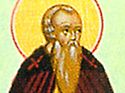 Venerable John of the Ancient Caves in PalestineSaint John of the Ancient Caves is so called because he lived during the eighth century in the Lavra of Saint Chariton. |
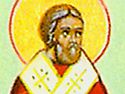 St. George the Confessor and Bishop of Antioch, in PisidiaSaint George the Confessor, Bishop of Antioch in Pisidia, lived during the Iconoclast period. |