


| Previous day | 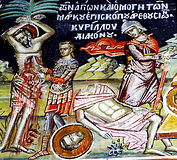
|
Next day |
| Old Style
March 29
|
Wednesday |
New Style
April 11
|
| Bright Week. Fast-free period. |  No fast.
|
 St. Mark the Confessor, bishop of Arethusa, and with him Hieromartyr Cyril, deacon, of Heliopolis, and others, who suffered under Julian the Apostate (ca. 363).
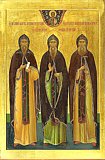
St. John, hermit of Egypt (4th c.). St. Eustasius, abbot, of Luxeuil (9th c.). Sts. Mark (15th c.) and Jonah (1480) of the Pskov Caves Monastery. St. Nicetas, desert-dweller of the Roslavl Forests, near Bryansk (1793).
New Hieromartyr Michael Viktorov, archpriest, of Boloshnevo (Ryazan) (1933). New Martyrs Priest Paul Voinarsky, and brothers Paul and Alexis Kiryan, of the Crimea (1919).
St. Diadochus, bishop of Photike in Epirus (ca. 486). St. Eustathius the Confessor, bishop of Kios in Bithynia (9th c.).
Thoughts for Each Day of the Year
According to the Daily Church Readings from the Word of God
By St. Theophan the Recluse

Wednesday. [Acts 2:22–36; John 1:35–51]
The mind can prove the truth of the Resurrection through reason based on the scriptures, and a non-believer cannot but admit the power of its arguments, as long as a sense of truth is not yet dead in him. A believer does not need proof, because the Church of God is filled with the light of the Resurrection. Both of these indicators of truth are faithful and convincing. But counter-reasoning can spring up and contradict mind’s reason, and faith can be trampled and shaken by perplexities and doubts, coming from without and arising within. Is there no invincible wall around the truth of the Resurrection? There is. It will occur when the power of the Resurrection, received already at baptism, begins to actively be revealed as it purges the corruption of soul and body, and establishes within them the beginnings of a new life. He who experiences this will walk in the light of the Resurrection, and anyone talking against the truth of the Resurrection will seem to him insane, like a person saying in the daytime that it is night.
Articles
 Hieromartyr Mark the Bishop of Arethusa, who suffered under Julian the ApostateHieromartyr Mark, Bishop of Arethusa, suffered for his faith in Christ under the emperor Julian the Apostate (361-363). |
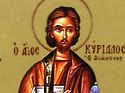 Martyr Cyril the Deacon of Heliopolis, who suffered under Julian the ApostateSaint Cyril destroyed many idols and pagan temples in Heliopolis, Phoenicia. |
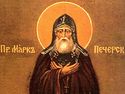
 Venerable Mark of the Pskov CavesOf the first Elders of the Pskov Caves monastery only Mark is known by name. |
 Venerable Jonah (John) of the Pskov CavesThe priest John (nicknamed “Shestnik”) came to this holy spot, where the first ascetics prayed. |