


| Previous day | 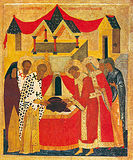
|
Next day |
| Old Style
July 2
|
Monday |
New Style
July 15
|
| 5th Week after Pentecost. Tone 3. |  No fast.
|
 The Placing of the Honorable Robe of the Most Holy Theotokos at Blachernae (5th c.).
St. Juvenal, patriarch of Jerusalem (ca. 458). St. Photius, metropolitan of Kiev (1431).
Uncovering of the relics of New Hieromartyr Sergius Florinsky, priest of Rakvere, Estonia (2003).
Icons of the Most Holy Theotokos “Of Akhtyra” (1739) and “The Root of Jesse”.
Martyrs Paul, Bilonus, Theonas, and Heron, at Thessalonica (3rd-4th c.). St. Monegunde of Chartres (Gaul) (530). St. Swithun, bishop and wonderworker of Winchester (862). St. Basil, patriarch of Jerusalem (836 or 838). Right-believing King Stephen the Great, of Moldavia (1504). Hieromartyr Juvenaly of Alaska, protomartyr of America (1796). New Martyr Lampros of Makri in Thrace (1835).
Repose of Archimandrite Lawrence of the Iveron-Valdai Monastery (1876) and Elder Zachariah, schema-archimandrite of St. Sergius Lavra (1936).
Thoughts for Each Day of the Year
According to the Daily Church Readings from the Word of God
By St. Theophan the Recluse

Monday. [Rom. 12:4-5, 15-21; Matt. 12:9-13]
It is lawful to do well on the sabbath days. This is what the said Lord after healing a man with a withered hand in the synagogue on the Sabbath day as a reproach to the Pharisees, who took the commandment about the Sabbath rest so far that they even measured the number of steps they could make on that day. But since it is not possible to do good deeds without movement, they would sooner agree to neglect good deeds than to allow any extra movement. The Saviour denounced them for this time and again, because the Sabbath required rest from worldly cares and not from deeds of piety and brotherly love. In Christianity instead of the Sabbath day, Sunday is celebrated with the same goal—rest from all worldly affairs and devotion of that day solely to deeds of God. Christian good sense never reached the pharisaic pettiness concerning not doing things on Sunday; but nevertheless the permissible allowance for doing things on this day has been set far beyond the proper limits. Not doing things alienated the Pharisees from doing good deeds, whereas the things which Christians allow themselves are what lead them away from good deeds. On the evening before Sunday they go to the theatre, then some other entertainment as well. In the morning they oversleep and there is no time to go to church. There are several visits, lunch, and in the evening again entertainment. Thus all time is relegated to the belly and pleasing the other senses, there is no time to even remember God and good deeds.
Articles

 St Photius the Metropolitan of KievSaint Photius, Metropolitan of Kiev and All Russia, was by birth a Greek from the Peloponnesian city of Monembasia (Malbasia). |
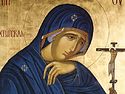 Icon of the Mother of God of AkhtyrThe Akhtyr Icon of the Most Holy Theotokos appeared on July 2, 1739 in the village of Akhtyr in the area of Kharkov, east of Kiev. |