| Previous day | 
|
Next day |
| Old Style
February 28
|
Saturday |
New Style
March 13
|
| Cheese-fare Week—no meat; fish and dairy allowed. Tone 6. |  Cheese-fare Week—no meat.
|
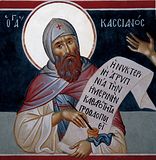
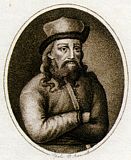
 St. John Cassian the Roman, abbot, of Marseilles (435). St. Basil the Confessor (ca. 750). St. Arsenius (Matsievich), metropolitan of Rostov, confessor (1772).
Hieromartyr Nestor, bishop of Magydos, at Perge in Pamphylia (250). Sts. Marina and Kyra, nuns, of Beroea in Syria (ca. 450). St. John, called Barsanuphius, of Nitria in Egypt (5th c.). Hieromartyr Proterius, patriarch of Alexandria, and six companions (457). St. Theosterictus the Confessor, abbot, of Pelecete Monastery near Prusa (8th c.). Blessed Nicholas of Pskov, fool-for-Christ (1576). St. Cassian, founder of Muezersk Hermitage (16th c). St. Meletius, archbishop of Kharkov (1840).
Apostles of the Seventy Nymphas and Eubulus (1). St. Romanus, desert-dweller of Condat in the Jura Mountains (Gaul) (460). New Virgin-martyr Kyranna of Thessalonica (1751). St. Germanus of Dacia Pontica (Dobrogea, Romania) (5th c.). St. Oswald, archbishop of York (992). St. Barsus of Damascus, bishop
Thoughts for Each Day of the Year
According to the Daily Church Readings from the Word of God
By St. Theophan the Recluse

Saturday. [Rom. 14:19–23, 16:25–27; Matt. 6:1–13. For the Fathers—Gal. 5:22–6:2; Matt. 11:27–30][1]
They that are Christ’s have crucified the flesh with the affections and lusts (Gal. 5:24). Nowadays, this order of things has been perverted: people crucify the flesh, but not together with the affections and lusts—rather by means of affections and lusts. How people now torture their bodies with overeating, drunkenness, lustful deeds, dancing and merry-making! The most heartless master does not torture his lazy animal this way. If we were to give our flesh freedom and reason, its first voice would be against its mistress—the soul; it would say that the soul has unlawfully interfered in the flesh’s affairs, brought passions alien to it, and tortures it by carrying these passions out in the flesh. Our body’s needs are essentially simple and passionless. Look at the animals: they do not overeat, they do not sleep in excess, and having satisfied their fleshly needs at the given time, they remain calm for the entire year. Only the soul, which has forgotten its better inclinations, has by its intemperance developed out of the body’s basic needs a multitude of unnatural inclinations, which are unnatural for the body as well. It is necessary to crucify the flesh in every possible way, in order to cut the fleshly passions off from the soul which the latter has grafted onto itself. This can be done only in the reverse—that is, by not giving it enough of what is necessary, or by meeting its needs to a far lesser degree than what its nature demands.
[1] The Romans Bible verses indicated in English at the top of this entry are changed so that the texts match the Russian Bible (three of the verses which are in Chapter 14 of the Russian Bible are found in Chapter 16 in the KJV).
Articles
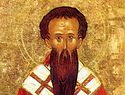
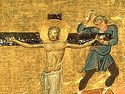 Hieromartyr Nestor the Bishop of Magydos in PamphyliaDuring a persecution against Christians under the emperor Decius (249-251), he was arrested while praying in his home. |
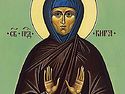
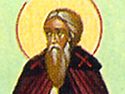 Venerable John-Barsanuphius the Bishop of DamascusSaint John, called Barsanuphius, was a native of Palestine. He was baptized when he was eighteen years old, and later became a monk. |
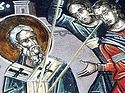
 Martyr TheokteristusThe Holy Martyr Theokteristus, Igumen of the Pelekete monastery, suffered for the holy icons under the impious emperor Constantine Copronymos (741-775). |