| Previous day | 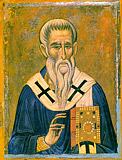
|
Next day |
| Old Style
April 11
|
Thursday |
New Style
April 24
|
| Bright Week. Fast-free period. |  No fast.
|
 Hieromartyr Antipas, bishop of Pergamus, disciple of St. John the Theologian (ca. 68).
Martyrs Processus and Martinian of Rome (ca. 67). St. Pharmuthius, anchorite of Egypt (4th c.). St. John, disciple of St. Gregory of Decapolis (9th c.). St. James, founder of Zhelezny Borok Monastery (Kostroma) (1442), and his fellow-ascetic St. James (15th c.). St. Barsanuphius, bishop of Tver (1576). Sts. Euthymius (1456) and Chariton (1509), abbots, of Syandema (Vologda). St. Callinicus of Cernica, bishop of Rimnic in Romania (1868).
Commemoration of the appearance of the Most Holy Theotokos at Pochaev (the “Footprint”) (1340).
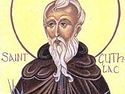
Hieromartyr Domninus, bishop of Salona in Dalmatia, and eight soldiers with him (ca. 100). St. Philip, bishop of Gortyna on Crete (180). St. Guthlac, hermit of Crowland (England) (714).
Repose of Elder Eulogius of St. George Kellion, Mt. Athos (1948).
Thoughts for Each Day of the Year
According to the Daily Church Readings from the Word of God
By St. Theophan the Recluse

Thursday. [Acts 2:38–43; John 3:1–15]
Beneficial is the work of those who, using sensible reason, crush the enormous lie mustered against the truth of the resurrection. Read and arm yourself with this reason; meanwhile, do not be too lazy to allow more and more space for the power of Christ’s Resurrection to enter into you. The more you do this, the more you will breathe the air of the Resurrection, and you will become quite safe from all the darts of the enemy, which are directed against this truth. You ask, what is needed for this? Nothing special: be the way you ought to be according to the vow you made in holy baptism, which is our resurrection. You spat on satan and all his works? So continue to preserve yourself thus in relation to him. Did you unite yourself with Christ? Then abide with Him. The deeds of darkness and light are obvious. Flee from the former and make all diligence with the latter. But do this without any compromises, even the smallest, so that the norm of your life becomes the following: there is no communion of light with darkness, or of Christ with Belial (cf. II Cor. 6:15).
Articles
 Martyrs Processus and Martinian of RomeThe Holy Martyrs Processus and Martinian were pagans and they served as guards at the Mamertine prison in Rome. |
 Venerable James the Abbot of ZheleznoborovAs a youth he went to Saint Sergius of Radonezh, received monastic tonsure from him, and lived at the Trinity monastery for several years. |