| Previous day | 
|
Next day |
| Old Style
April 12
|
Friday |
New Style
April 25
|
| Bright Week. Fast-free period. |  No fast.
|
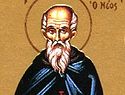
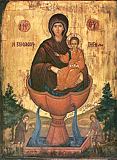
Blessing of Water. The Life-giving Spring of the Most Holy Theotokos. St. Basil the Confessor, bishop of Parium (754).
Hieromartyr Zeno, bishop of Verona (ca. 260). St. Isaac the Syrian, abbot, of Spoleto, Italy (550). Monk-martyrs Menas, David, and John, of Palestine (after 636). Virgin Anthusa of Constantinople (801). St. Athanasia the Wonderworker, abbess, of Aegina (860).
Pochaev Icon of the Most Holy Theotokos. Commemoration of the appearance of the Most Holy Theotokos at Pochaev (the “Footprint”) (1340). Meeting of the Most Holy Theotokos and St. Elizabeth. Deposition of the Cincture [Sash] of the Most Holy Theotokos in Constantinople (942).
Martyr Sabbas the Goth, at Buzau in Wallachia (372). St. Gennadius, steward of Vatopedi, Mt. Athos (14th c.). St. Sergius II, patriarch of Constantinople (1019). St. Basil, bishop of Ryazan (1295). St. Acacius of Kapsokalyvia Skete, Mt. Athos (1730).
Repose of Archbishop Juvenal of Vilnius, Lithuania, monk of Optina Monastery (1904).
Thoughts for Each Day of the Year
According to the Daily Church Readings from the Word of God
By St. Theophan the Recluse

Friday. [Acts 3:1–8; John 2:12–22]
There are certain individuals whom the holy fathers praise for their Christian lives, for they rose from the dead before the general resurrection. What is the secret of such a life? They mastered the characteristic features of a life according to the resurrection as they are shown in the word of God, and made them their own inner properties. The future life is devoid of all that is fleshly: there men neither marry, nor are women given in marriage, there they will not eat dead food, and they will receive a spiritual body. Thus, whoever lives estranged from all fleshly things receives in himself, or returns to himself, elements of the future life according to the resurrection. Reach the point that all fleshly things within you die, and you will be resurrected before the future resurrection. The apostle indicates the path to this when he says: Walk in the Spirit, and ye shall not fulfil the lust of the flesh (Gal. 5:16). And he attests that through this path it is surely possible to attain what is awaited: he that soweth to the Spirit, he says, shall of the Spirit reap life everlasting (Gal. 6:8).
Articles
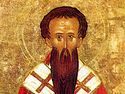
 Hieromartyr Zeno the Bishop of VeronaSaint Zeno, Bishop of Verona, was born a Greek and came from Syria. In his youth he became a monk and devoted himself to the study of Holy Scripture. |
 Monk-martyrs Menas, David, and John, of PalestineThey were martyred in the seventh century by Arabs. |
 The Venerable Anthusa of ConstantinopleThe holy princess Anthusa of Constantinople was the daughter of the Iconoclast emperor Constantine Copronymos (reigned 741-775) and his third wife Eudokia. |
 Venerable Athanasia the Abbess of AeginaSaint Athanasia was abbess of a monastery on the island of Aegina in the ninth century. |