| Previous day | 
|
Next day |
| Old Style
April 13
|
Saturday |
New Style
April 26
|
| Bright Week. Fast-free period. |  No fast.
|
 Hieromartyr Artemon, priest, of Laodicea in Syria (303).
Martyr Crescens of Myra in Lycia (3rd c.). Martyr Thomais of Alexandria (476). St. Anastasia, nun and foundress of the Protection Convent in Kiev (1900).
New Nunmartyr Martha (Testova) of Diveyevo (1941).
Martyr Eleutherius of Persia (4th c.). Martyr Zoilus of Rome (4th c.). St. Martyrius, patriarch of Jerusalem (486). St. Martius, abbot, of Clermont (Gaul) (ca. 530). St. Herman, archimandrite, of Svyatogorsk Monastery (1890). St. Martin the Confessor, pope of Rome (655).
Repose of Elder Cosmas of Pantocrator, Mt. Athos (1970).
Thoughts for Each Day of the Year
According to the Daily Church Readings from the Word of God
By St. Theophan the Recluse

Saturday. [Acts 3:11–16; John 3:22–33]
We have two lives, fleshly and spiritual. Our spirit is as though buried in our flesh. Once it begins to extract itself—coming to life by God’s grace—from its intertwining with the flesh and to appear in its spiritual purity, then it will be resurrected, or it will resurrect itself piece by piece. When it wholly tears itself out of this binding, then it comes forth as if from a tomb, in a renewed life. In this manner the spirit becomes separate, alive and active; whereas the tomb of the flesh is separate, dead and inactive, though both are in the same person. This is the mystery of what the apostle says: where the Spirit of the Lord is, there is liberty (II Cor. 3:17). This is liberty from decay, which surrounds our incorruptible spirit; or from passions, corrupting our nature. This spirit, entering into the freedom of the children of God is like a beautifully coloured butterfly, fluttering away from its cocoon. Behold its rainbow colouring: love, joy, peace, longsuffering, gentleness, goodness, faith, meekness, temperance (Gal. 5:22). Is it possible for such a beauty of perfection not to arouse in us a desire to emulate it?
Articles
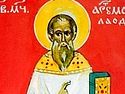
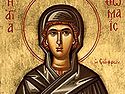 Womanmartyr Thomais of AlexandriaThe Holy martyr Thomais was born into a Christian family in the city of Alexandria. She was raised in piety, and loved to read spiritual books. |