


| Previous day | 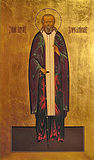
|
Next day |
| Old Style
April 21
|
Sunday |
New Style
May 4
|
| 3rd Sunday of Pascha. Sunday of the Myrrh-bearing Women. Tone 2. |  No fast.
|
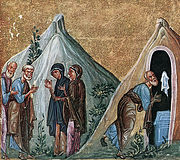
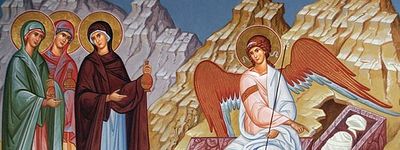
 Sunday of the Myrrh-bearing Women: Mary Magdalen; Mary, the wife of Cleopas; Joanna; Salome, the mother of the sons of Zebedee; Susanna; Mary and Martha, the sisters of Lazarus; Mary, Mother of Apostle James. Righteous Joseph of Arimathea and Nicodemus. Hieromartyrs Januarius, bishop of Benevento, and his companions: Festus, Proclus, and Sosius, deacons; Martyrs Desiderius, reader; and Gantiol, Eutychius, and Acutius, at Pozzuoli (ca. 305). Martyrs Theodore of Perge in Pamphylia, his mother Philippa, and Dioscorus, Socrates, and Dionysius (ca. 138-161). Uncovering of the relics of St. Theodore, abbot, of Sanaxar Monastery (1999). St. Alexis, priest, of Bortsumany, Nizhni- Novgorod (1848).
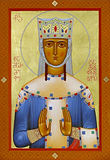
Martyrs Isaac, Apollo, and Codratus, of Nicomedia (303). St. Maximus (Maximian), archbishop of Constantinople (434). St. Tamara, queen of Georgia (13th c.).
Martyr Alexandra the Empress, wife of Diocletian (303) (same as April 23). All Saints of Thessalonica: New Monk-martyr Elias (Ardunis) of Mt. Athos and Kalamata (1686). New Hieromartyr Seraphim, archbishop of Phanarion and Neochorion (1601). New Martyr Demetrius of the Peloponnese, at Tripolis (1803). St. Beuno, abbot, of Clynnog Fawr, Wales (642). St. Maelruba of Apur Crossan, Ireland (722). St. James, abbot of Stromynsk Monastery (Radonezh) (1392). New Hieromartyr Protopresbyter Basil Martysz of Teratyn (Chelm and Podlasie, Poland (1945).
Repose of Schemamonk Nicetas (1907) and Hieroschemamonk Antipas II (1912), of Valaam, Elder Dometian of Tula (1908), and Nun Stefanida of Kosovo (Serbia) (1945).
Thoughts for Each Day of the Year
According to the Daily Church Readings from the Word of God
By St. Theophan the Recluse

Sunday of the Myrrh-Bearing Women. [Acts 6:1–7; Mark 15:43–16:8]
The tireless women! They would not give sleep to their eyes nor slumber to their eyelids (cf. Ps. 132) until they found their Beloved! But the men as if dragged their feet: they went to the tomb, saw it empty, and remained in confusion about what it could mean because they did not see Him. But does this mean that they had less love than the women? No, here was a reasoning love which feared making a mistake due to the high price of this love and its object. When they too saw and touched Him, then each of them, not with his tongue, like Thomas, but with his heart confessed: my Lord and my God (John 20:28), and already nothing could separate them from the Lord. The myrrh-bearers and the Apostles are an image of the two sides of our life: feeling and reasoning. Without feeling life is not life; without reasoning life is blind, offers little sound fruit and much is wasted. We must combine both. Let feeling go forward and arouse; let reason determine the time, place, method and generally the practical arrangement of what the heart suggests for us to do. Within, the heart comes first, but in practical application, reason comes first. When the feelings become educated in discerning good and evil, then perhaps it will be possible to rely on the heart alone. Just as shoots, flowers and fruits grow naturally from a living tree, so does goodness alone emerge from the heart, rationally mingling into the course our life.
Articles
 Sunday of the Myrrh-bearing Women |