


| Previous day | 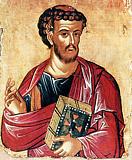
|
Next day |
| Old Style
April 22
|
Monday |
New Style
May 5
|
| 3rd Week after Pascha. Tone 2. |  No fast.
|
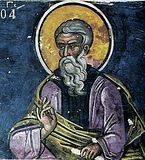
 St. Theodore the Sykeote, bishop of Anastasiopolis (613).
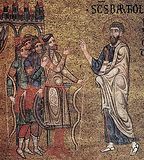
Holy Apostle Nathaniel of the Twelve, Apostles Apelles, Luke (not the Evangelist), and Clement, of the Seventy (1st c.). Martyr Epipodius of Lyons (ca. 177). St. Vitalis, monk of the monastery of Abba Seridus at Gaza (609-620). Translation of the relics of St. Vsevolod (in holy baptism Gabriel), prince and wonderworker of Pskov (1834). New Hieromartyr Platon, bishop of Banja Luka (1941). Blessed Fool-for-Christ Ekaterina of Piukhtitsa Convent (Estonia) (1968).
Martyr Leonidas of Alexandria (202). St. Ananias, abbot, of Malles (Crete) (1907).
Repose of Blessed Fool-for-Christ Athanasius Andreyevich Saiko of Orel (1967)
Thoughts for Each Day of the Year
According to the Daily Church Readings from the Word of God
By St. Theophan the Recluse

Monday. [Acts 6:8–7:5, 47–60; John 4:46–54]
Saint Stephan says: The most High dwelleth not in temples made with hands...What house will ye build Me? saith the Lord or what is the place of My rest? (Acts 7:48–49). Only the temple in the heart not made with hands can contain God, as the Lord said: If a man love Me, he will keep My words: and My Father will love him, and We will come unto him, and make our abode with him (John 14:23). How this is accomplished is unfathomable for us, but it is true because it is obvious that then it is God which worketh in you both to will and to do of his good pleasure (Phil. 2:13).[1] Do not reason, just give your heart away to the Lord, and He Himself will establish of it a church for Himself—but give it unsparingly. If there are parts which are not given, then from the heart a whole church cannot be established, for one thing will be decayed, another broken—and what will come out, if anything comes out, is a church with holes or without a roof, or without doors. It is not possible to live in such a church: the Lord will not be in it. It will only seem that it is a church, but in reality will be a conglomerate mass.
[1]The Slavonic for Phil 2:13 reads: God worketh in us both desire and action, according to his good pleasure
Articles
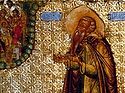
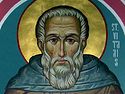 Venerable Vitalius of GazaWhen he was sixty years old, undertook an extraordinary task: he wrote down from memory the names of all the prostitutes of Alexandria and he began to pray for them. |
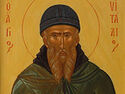 Venerable St. VitalyBefore Vitaly’s funeral, the women whom Vitaly had put on the right path assembled to tell Patriarch John and many other people about Monk Vitaly’s virtuous life. |
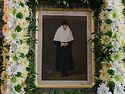 Blessed Ekaterina of PukhtitsaSt. Ekaterina (Malkov-Panina) was born on May 15, 1889 in Finland in a family with six children. |