| Previous day | 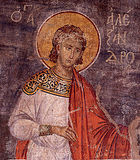
|
Next day |
| Old Style
May 13
|
Monday |
New Style
May 26
|
| 6th Week after Pascha. Tone 5. |  No fast.
|
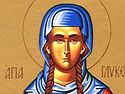
 Virgin-martyr Glyceria and her jailer Martyr Laodicius, at Heraclea (138).
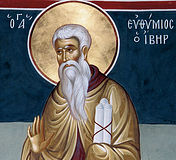
Martyr Alexander of Rome (ca. 284-305). St. Pausicacius, bishop of Synnada (ca. 606). Sts. George the Confessor, his wife Irene and children, of Constantinople (ca. 842). St. Euthymius the New (1028), founder of Iveron Monastery, and his fellow Georgian saints of Mt. Athos: his father John (998), his cousin George (1065), and Gabriel (10th c.). Righteous Virgin Glyceria of Novgorod (1522). Translation of the relics of Hieromartyr Macarius of Kanev, archimandrite, of Ovruch and Pinsk (1688). St. Macarius, abbot, of Glushitsa Monastery (Vologda) (1480).
New Hieromartyrs Basil Sokolov, Christopher Nadezhdin, and Alexander Zaozersky, archpriests, and Macarius (Telegin), hieromonk, and Martyr Sergius Tikhomirov, of Moscow (1922). Synaxis of the 103 New Martyrs of Cherkassy (20th c.).
St. Servatius, first bishop of Maastricht (384). St. Euthymius, patriarch of Jerusalem (1084). Commemoration of the monks of Iveron Monastery martyred by the Latins in the 13th century. St. Euphrosynus of Iveron (18th c.). St. Nicephorus, priest, of the monastery of Ephapsios.
Repose of Ryassaphore-monk John of St. Nilus of Sora Monastery (1863) and Eldress Sepfora of Klykovo (1997).
Thoughts for Each Day of the Year
According to the Daily Church Readings from the Word of God
By St. Theophan the Recluse

Monday. [Acts 17:1–15; John 11:47–57]
What do we? for this man doeth many miracles (John 11:47). Jewish erudition found the Saviour to be guilty. And in our days, German erudition[1] finds what is supernatural to be out of place in the Gospels of Christ: everything is good, only this [the miraculous] just won’t work. These two ways of thinking meet in the final analysis. Jewish erudition decided: it is expedient that one man should die (John 11:50), and that the rest might not perish, while German erudition states: we will eliminate the supernatural to preserve all the other Gospel truths. And what came of this? The Jews destroyed their people, while the Germans lost all Christian truths, and now are left with almost nothing. The Lord is the cornerstone of the house of salvation; similarly faith in the supernatural is the cornerstone of the entire building of God-inspired truth. The Saviour Himself, in His Person, is the crown of the supernatural, and its inexhaustible Source is in the Church. He who touches this point is touching the apple of God’s eye.
[1] By “German erudition” St. Theophan is most likely referring to the Protestant German philosophers of his time.
Articles
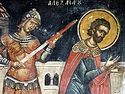 Martyr Alexander of RomeThe Holy Martyr Alexander suffered for Christ at the beginning of the fourth century. |
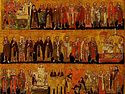 St. Pausicacus the Bishop of SynnadaSaint Pausicacus, Bishop of Synnada, lived at the end of the sixth century in the Syrian city of Apamea. |
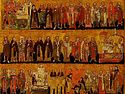 St. George the Confessor, with his wife and children of ConstantinopleThe Holy Confessor George suffered for the veneration of holy icons at Constantinople in the first half of the ninth century. |
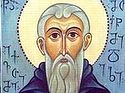
 Righteous Virgin Glyceria of NovgorodRighteous Virgin Glyceria of Novgorod, was the daughter of Panteleimon, a starosta of Legoscha Street in Novgorod. |
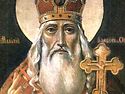 Martyr Macarius the Archimandrite of Kanev and PereyaslavlThe Hieromartyr Macarius of Kanev lived in the seventeenth century. This was a most terrible time for Orthodox Christians in western Rus. |