


| Previous day | 
|
Next day |
| Old Style
May 19
|
Sunday |
New Style
June 1
|
| 7th Sunday of Pascha. Sunday of the Holy Fathers of the First Ecumenical Council. Tone 6. |  No fast.
|
Afterfeast of the Ascension.  Hieromartyrs Patrick, bishop of Prusa, and his companions: priests Acacius, Menander, and Polyenus (ca. 100).
  St. Cornelius, founder of Komel Monastery (Vologda) (1537). St. Demetrius Donskoy, great prince of Moscow (1389). and his wife St. Eudocia, in monasticism Euphrosyne, princess of Moscow (1407).
Martyr Acoluthus of Hermopolis, Egypt (284-303). St. John, bishop of Gothia in the Crimea (790). St. Cornelius, founder of Paleostrov Monastery (Karelia) (ca. 1420) Synaxis of the New Martyrs of Chelm and Podlasie (Poland). and his disciple Abramius (15th c.). St. John, prince of Uglich, tonsured as Ignatius (Vologda) (1523). St. Sergius, monk, of Shukhtom (1609). Right-believing Prince Vladimir II (Basil) Monomakh of Kievan Rus (1125). St. Nicholas Rynin, fool-for-Christ, of Vologda (1837).
New Hieromartyrs Anthony (Pankeyev), bishop of Belgorod, and with him priests Mitrophan, Alexander, Michael, Matthew, Hippolytus, Nicholas, Basil, Nicholas, Maxim, Alexander, Paul, and Paul; and Martyrs Michael and Gregory (1938). New Hieromartyr Onuphrius (Gagaliuk), archbishop of Kursk and Oboyansk (1938). New Hieromartyr Valentin (Lukianov), hieromonk, of Romashkovo (Moscow) (1940). New Hiero-confessor Seraphim (Zagorovsky), hieromonk, of Kharkov (1943). Synaxis of the Hieromartyrs of Kharkov.
“Chelnsk” Icon of the Most Holy Theotokos.
Martyrs Parthenius and his brother Calogerius at Rome (250). St. Theotima of Nicomedia (311). Entrance into Georgia of St. Nina (Nino), Equal-to the-Apostles (323). St. Dunstan, archbishop of Canterbury (988). Monk-martyrs and confessors John, Conon, Jeremiah, Cyril, Theoctistus, Barnabas, Maximus, Theognostus, Joseph, Gennadius, Gerasimus, Mark, and Herman, of Kantara Monastery on Cyprus, who suffered under the Latins (1231).
Commemoration of the ascetics of St. Athanasius of Syandem Monastery: Elias (also of Valaam), Theophanes, and Dionysius. Repose of Elder Cleopas of Valaam, disciple of St. Paisius (Velichkovsky) (1816).
Thoughts for Each Day of the Year
According to the Daily Church Readings from the Word of God
By St. Theophan the Recluse

Sunday of the Holy Fathers. [Acts 20:16–18, 28–36; John 17:1–13]
Arias began to deny the divinity of the Son of God and His oneness in essence with God the Father. The entire Church rose up against him; all believers, from all ends of the earth, unanimously confessed that the Lord Jesus Christ is the Only-Begotten Son of God, true God of true God; begotten, not made, of one essence with the Father. One would think that this unanimity was purely coincidental, but this faith was then tried by fire when the authorities and powerful of this world began to side with the Arians. Neither fire, nor sword, nor persecution could extinguish this faith, and it was immediately found everywhere among everyone, as soon as the pressure from external powers ceased. This means that it makes up the heart of the Church and the essence of her confession. Glory be to the Lord, Who preserves this faith within us! For, as long as it exists, we are still Christians, though we may not live as such. If it ceases to exist, Christianity will end.
Articles
 Hieromartyr Patrick the Bishop of Prusa with his companionsSaint Patrick lived during the first century and was bishop of the city of Prusa in Bythnia (Asia Minor). |
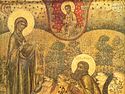 Venerable Cornelius the Abbot of Komel, VologdaSaint Cornelius of Komel was descended from the boyar (noble) family Kriukov. His brother Lukian served at the court of the Great Prince of Moscow. |
 Martyr Caluf of EgyptThe Holy Martyr Caluf the Egyptian lived during the third century, and was from the city of Thebes. |
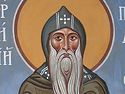
 Right-believing John the Prince of Uglich, Tonsured As Ignatius, VologdaThe holy Prince John of Uglich was a devout and God-fearing Christian from his youth. |
 Venerable Sergius of ShukhtomSaint Sergius of Shukhtom (in the world Stephen) was born at Kazan. For three years he traveled to the holy places of Palestine and Greece, studying the monastic life. |
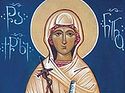
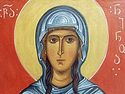
 St. Nina, Equal-to-the-ApostlesSt. John of ShanghaiThat’s how Nina, weak in body but strong in spirit, performed the great work of faith, enlightening the pagan people with the faith in Christ. |