| Previous day | 

|
Next day |
| Old Style
June 25
|
Tuesday |
New Style
July 8
|
|
5th Week after Pentecost.
Tone 3.
Fast of the Holy Apostles. |
 Fish, wine and oil allowed.
|
 Virgin-martyr Febronia of Nisibis (ca. 304).
  Holy Prince Peter and Princess Febronia (tonsured David and Euphrosyne), wonderworkers of Murom (1228).
St. Dalmatus, founder of the Dormition Monastery in Siberia (1697). St. Cyprian, hieromonk of Svyatogorsk Monastery (1874).
New Hiero-confessor Nikon (Belyaev), hieromonk of Optina Monastery (1931).
Virgin-martyrs Libya, Leonis, and Eutropa, of Palermo in Sicily (ca. 305). Martyr Gallicanus the Patrician, in Egypt (362). St. Moluac of Lismore (Scotland) (592). Virgin-martyr Eurosia (Orosia), at Jaca (Spain) (714). St. Adalbert, hierodeacon (Neth.) (740). Sts. Dionysius (ca. 1389) and Dometius (1405-1410) of Dionysiou Monastery, Mt. Athos. New Monk-martyr Procopius of Varna and Mt. Athos, at Smyrna (1810). New Martyr George of Attalia, at Krene in Asia Minor (1823).
Repose of Metropolitan Theoleptus of Philadelphia (1322) and Hierodeacon Serapion of Glinsk Hermitage (1859).
Thoughts for Each Day of the Year
According to the Daily Church Readings from the Word of God
By St. Theophan the Recluse

Monday. [Rom. 12:4-5, 15-21; Matt. 12:9-13]
It is lawful to do well on the sabbath days. This is what the said Lord after healing a man with a withered hand in the synagogue on the Sabbath day as a reproach to the Pharisees, who took the commandment about the Sabbath rest so far that they even measured the number of steps they could make on that day. But since it is not possible to do good deeds without movement, they would sooner agree to neglect good deeds than to allow any extra movement. The Saviour denounced them for this time and again, because the Sabbath required rest from worldly cares and not from deeds of piety and brotherly love. In Christianity instead of the Sabbath day, Sunday is celebrated with the same goal—rest from all worldly affairs and devotion of that day solely to deeds of God. Christian good sense never reached the pharisaic pettiness concerning not doing things on Sunday; but nevertheless the permissible allowance for doing things on this day has been set far beyond the proper limits. Not doing things alienated the Pharisees from doing good deeds, whereas the things which Christians allow themselves are what lead them away from good deeds. On the evening before Sunday they go to the theatre, then some other entertainment as well. In the morning they oversleep and there is no time to go to church. There are several visits, lunch, and in the evening again entertainment. Thus all time is relegated to the belly and pleasing the other senses, there is no time to even remember God and good deeds.
Tuesday. [Rom. 14:9-18; Matt. 12:14-16, 22-30]
He that is not with me is against me; and he that gathereth not with me scattereth abroad. Who is with the Lord? He who lives and acts in His spirit; he who allows himself neither thoughts, nor feelings, nor desires, nor intentions, nor words, nor deeds, which would be unpleasing to the Lord and in opposition to His revealed commandments and determinations. He who lives and acts otherwise, is not with the Lord and consequently does not gather, but scatters. What does he scatter? Not only energy and time, but also what he gathers. For example, one who gathers riches not with the Lord, amasses only riches, not sharing with others, while depriving himself even of necessary things; or another gathers them, spends a part on his own luxurious lifestyle, part on donations made out of vainglory, and saves part for his heirs. In the other world he will appear with nothing—and there he will be the poorest of the poor. On the contrary, one who gathers riches with the Lord passes on what is gathered through the hands of the poor and needy, unto eternal treasuries. When such a person dies, he will find in that world all his riches intact, not scattered, although he spent them throughout his life. The same applies to the gathering of knowledge. Here scattering is even more obvious, because it can be seen how one who is intellectual not in the Lord gathers a seeming mountain of knowledge, but it is no more than rubbish—a phantom of the truth, and not the truth. They not only lack knowledge, but even loose human sense. They become delirious, like one who is asleep. Read the systems of the materialists and you will see that this is so.
Articles
 Virginmartyr Febronia of Nisibis |
St Peter, Tonsured David, the Wonderworker of Murom |
St Febronia, Tonsured Euphrosyne, the Wonderworker of Murom |
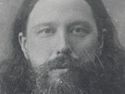
Venerable Nikon of Optina |