


| Previous day | 
|
Next day |
| Old Style
June 26
|
Wednesday |
New Style
July 9
|
|
5th Week after Pentecost.
Tone 3.
Fast of the Holy Apostles. |
 Wine and oil allowed.
|
 Appearance of the Tikhvin Icon of the Most Holy Theotokos (1383).
  St. David of Thessalonica (540).
St. John, bishop of Gothia in the Crimea (ca. 800). St. Dionysius, archbishop of Suzdal (1385). Uncovering of the relics of St. Tikhon of Lukhov (1569). Translation of the relics of St. Nilus of Stolobny (1995).
Icon of the Most Holy Theotokos “Of Lydda” (1st c.) Icon of the Mother of God “Neamts” (1399). and “Of the Seven Lakes” (Kazan) (17th c.).
St. Brannock (Brynach) of Braunton, England (6th c.). Martyr Pelagius of Cordoba (925). New Martyr David of St. Anne’s Skete, Mt. Athos, at Thessalonica (1813).
Thoughts for Each Day of the Year
According to the Daily Church Readings from the Word of God
By St. Theophan the Recluse

Wednesday. [Rom. 15:7-16; Matt. 12:38-45]
In every person who lives unrepentant in sin there lives a demon, as if in a house, who takes charge over everything within him. When by the grace of God such a sinner comes to contrition over his sins, repents and ceases to sin—the demon is cast out from him. At first the demon does not disturb the one who has repented, because there is much fervour within him in the beginning, which burns demons like a fire, and repulses them like an arrow. But then, when fervour begins to grow cold, the demon approaches from afar with its suggestions, throws in memories about former pleasures and calls him to them. If the penitent does not beware, he will soon pass from a sympathy to a desire for sin; if he does not come to his senses and return himself to the state of his former soberness, then a fall is not far off. From desire are born the inclination for sin and decision to commit it—the inner sin is ready; the outer sin is only waiting for a convenient occasion. When an occasion presents itself, the sin will be accomplished. Then the demon will enter again, and begin to drive a person from sin to sin even faster than before. The Lord portrayed this with the parable about the second return of the demon into the clean, swept house.
Articles
 Appearance of the Tikhvin Icon of the Mother of God |
St David of Thessaloniki |
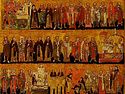
St Dionysius the Archbishop of Suzdal |
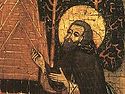
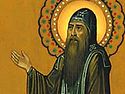 Venerable Tikhon of Luchov, KostromaSt Tikhon of Lukh, and Kostroma (in the world Timothy), was born within the bounds of the Lithuanian princedom and was in military service there. |
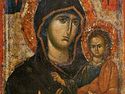
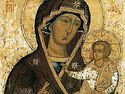 Icon of the Mother of God of Seven LakesThe “Seven Lakes” Icon of the Most Holy Theotokos shone forth with many miracles in the seventeenth century in the area of Kazan. |