| Previous day | 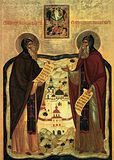
|
Next day |
| Old Style
June 28
|
Friday |
New Style
July 11
|
|
5th Week after Pentecost.
Tone 3.
Fast of the Holy Apostles. |
 Wine and oil allowed.
|
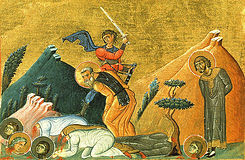
 Translation of the relics of the Holy Wonderworking Unmercenaries and Martyrs Cyrus and John (412).
  Sts. Sergius and Herman, founders and abbots of Valaam (14th c.).
St. Xenophon, founder of Robeika Monastery (Novgorod) (1262). St. Paul the Physician, of Corinth (7th c.). St. Heliodorus, schema-archimandrite of Glinsk Hermitage (1879).
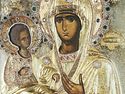
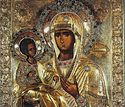
Icon of the Most Holy Theotokos “Of the Three Hands” of Hilandar, Mt. Athos (8th c.).
St. Senuphius the Standard-bearer, of Egypt (late 4th c.). St. Austell of Cornwall (6th c.). St. Theodichildis (Telchildis), abbess, of Jouarre (Gaul) (ca. 660). St. Sergius the Magistrate, of Paphlagonia, founder of the Nikitiatus Monastery in Nicomedia (866). St. Sophrony (Sakharov) of Essex (1993).
Repose of Archimandrite Methodius (Popovich) of Jerusalem (1997).
Thoughts for Each Day of the Year
According to the Daily Church Readings from the Word of God
By St. Theophan the Recluse

Friday. [Rom. 16:1-16; Matt. 13:4-9]
The parable about the sower depicts various relationships of souls toward the word of God. In the first group stand those who do not heed the word at all. They hear, but what is heard does not enter into their soul; it lies on its surface, like the seed by the wayside. The word does not fit in them because they have another way of thinking, other principles, other tastes. That is why it soon disappears from memory, is forgotten as if it was not heard at all. The second group is of those who hear the word willingly and receive it quickly, but do not want to bear any labour to fulfil it. Therefore, they delight in the word—especially its promises—until a sacrifice is required. As soon as the necessity arises to sacrifice something for faithfulness to the word, they betray it, renouncing both the word and its promises in order to cater to their attachments. The third group is of those who receive the word and begin to live according to it, but then give themselves over to many cares and sorrows of the world, to earthly concerns, which suppress all the good undertakings which had just formed under the influence of the word of God. The fourth group is of those who receive the word with full faith and resolve to live according to its requirements, with a readiness for all sacrifices and labour, and do not allow their heart to be tied to anything earthly. Sit and decide each of you, to which of these groups you belong.
Saturday. [Rom. 8:14-21; Matt. 9:9-13]
When someone, by his fear of God and the demands of his conscience already has an awakened thirst for spiritual things, he possesses a certain sense enabling him to understand the meaning of words relating to the spiritual sphere, although they might be clothed in the form of a parable. For such people a parable does not hide the truth, but rather reveals it even more clearly. But he who is not of this disposition does not understand any spiritual content described in the form of a parable. Even if one were to offer him a word on these subjects that was not in the form of a parable he would only understand the words, and not comprehend the essence of the matter. It would go against all of his notions, and seem to him to be an absurdity which he would not hesitate to mock. This is precisely why the Lord talked to the people in parables. Whoever is spiritually inclined will understand a parable, whereas someone with no inclinations will not understand no matter what you say. Because they seeing see not; and hearing they hear not, neither do they understand…For this people’s heart is waxed gross (Matt. 13:12-15). Meanwhile, the parable did not deprive of needed instruction those who were capable of seeing the hidden truth: For whosoever hath, to him shall be given, and he shall have more abundance.
Articles
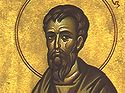
 Wonderworker and Unmercenary CyrusSaint Cyrus was a noted physician in the city of Alexandria, where he had been born and raised. |
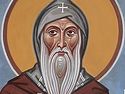 Venerable Sergius the Wonderworker of ValaamSaints Sergius and Herman settled on the island of Valaam in 1329. |
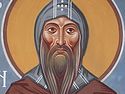 Venerable Herman the Wonderworker of ValaamSaints Sergius and Herman settled on the island of Valaam in 1329. The brethren gathered by them spread the light of Orthodoxy in this frontier land. |
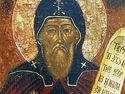 Venerable Xenophon the Abbot of Robeika, NovgorodSaint Xenophon of Robeika was a student of St. Barlaam of Khutyn. |