| Previous day | 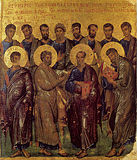
|
Next day |
| Old Style
June 30
|
Sunday |
New Style
July 13
|
| 5th Sunday after Pentecost. Tone 4. |  No fast.
|
 Synaxis of the Holy, Glorious, and All-Praised Twelve Apostles: Peter, Andrew, James and John the sons of Zebedee, Philip, Bartholomew, Thomas, Matthew, James the son of Alphaeus, Jude the brother of James, Simon the Zealot, and Matthias.
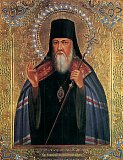
St. Andrew, prince of Bogoliubovo (1174). St. Peter, prince of the Tatar Horde, wonderworker of Rostov (1290). Glorification of St. Sophronius, bishop of Irkutsk (1918). Synaxis of St. Arsenius and All Saints of Tver (1483). Sts. Tikhon, Basil, and Nikon, monks of Sokolov (16th c.). Monk-martyrs Neophytus (2), Jonah (2), and Parthenius, of Lampsacus. St. Stephen of Omsk (1877). Synaxis of the Saints of Chernigov.
New Hieromartyrs Nicandor (Prusak), hieromonk of Tolga Monastery (Yaroslavl) (1918) and Theogenes (Kozyrev), archimandrite, of Chimkent (Kazakhstan) (1939).
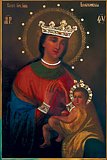
Icon of the Mother of God of Balikin (1711).
Martyr Basilides the Soldier, at Alexandria (202). St. Martial, bishop of Limoges (3rd c.). St. Erentrude, abbess of Nonnberg Monastery, Salzburg (ca. 718). St. Dinara, queen of Khereti, Georgia (10th c.). St. Gelasius of Rimet (Transylvania) (14th c.). New Martyr Michael Paknanas the Gardener, of Athens (1770). New Hieromartyr Milan Popovic, priest, of Rmanj (1940s). New Martyr Alexander (Schmorell) of Munich (1943). Martyr Peter of Sinope.
Repose of Bishop Nestor (Zass) of the Aleutians and Alaska (1882).
Thoughts for Each Day of the Year
According to the Daily Church Readings from the Word of God
By St. Theophan the Recluse

Fifth Sunday after Pentacost. [Rom. 10:1-10; Matt. 8:28-9:1]
The Gadarenes saw the Lord’s wondrous miracle, when He cast out a legion of devils, and yet, the whole city came out and besought the Lord that He would depart out of their coasts. We do not observe them relating hostilely to the Lord, but neither to we observe any faith in them. They are seized with a sort of indeterminate fearfulness, making them to desire only that the Lord pass them by, wherever He wishes, “only do not touch us.” This is a true image of people who live in peace with their possessions. An order of things has formed around them which is not unfavourable; they are used to it, they have neither thoughts nor the need to change or reverse anything, and they fear to make a new step. They feel, however, that should a command come down from above, the fear of God and their conscience would force them to renounce the old and accept something new. Therefore, they strive to avoid any circumstance which might lead them to such convictions, that they might continue living quietly in their old habits, pleading ignorance. These are the sort of people who are afraid to read the Gospels and patristic books, or to discuss spiritual matters. They fear that if their conscience be thereby disturbed, it might wake up and start forcing them to abandon what they had, and take up something else.
Articles
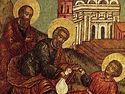
 Synaxis of the Holy, Glorious and All-Praised Twelve ApostlesThe Synaxis of the Glorious and All-Praiseworthy Twelve Apostles of Christ appears to be an ancient Feast. |
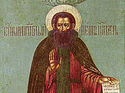 St Peter the Prince of Ordinsk, RostovSaint Peter, Prince of the Horde, was the nephew of Bergai Khan of the Golden Horde. |
 Holy Queen DinarThe Russian Church has preserved chronicles of the life of Queen Dinar, a woman who achieved much on behalf of the Christian Faith. |
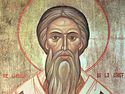 St Gelasius of RimetSaint Gelasius was the igumen of the Rimet Monastery in Transylvania. He had lived as a solitary near Rimet creek, and he was granted the grace of working miracles. |