| Previous day | 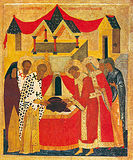
|
Next day |
| Old Style
July 2
|
Tuesday |
New Style
July 15
|
| 6th Week after Pentecost. Tone 4. |  No fast.
|
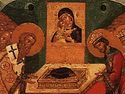
 The Placing of the Honorable Robe of the Most Holy Theotokos at Blachernae (5th c.).
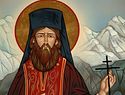
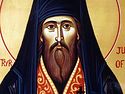
St. Juvenal, patriarch of Jerusalem (ca. 458). St. Photius, metropolitan of Kiev (1431).
Uncovering of the relics of New Hieromartyr Sergius Florinsky, priest of Rakvere, Estonia (2003).
Icon of the Mother of God of Theodotiev (1487). Icon of the Mother of God of Pozhai (XVII). Icons of the Most Holy Theotokos “Of Akhtyra” (1739) and “The Root of Jesse”.
Martyrs Paul, Bilonus, Theonas, and Heron, at Thessalonica (3rd-4th c.). St. Monegunde of Chartres (Gaul) (530). St. Swithun, bishop and wonderworker of Winchester (862). St. Basil, patriarch of Jerusalem (836 or 838). Right-believing King Stephen the Great, of Moldavia (1504). Hieromartyr Juvenaly of Alaska, protomartyr of America (1796). New Martyr Lampros of Makri in Thrace (1835).
Repose of Archimandrite Lawrence of the Iveron-Valdai Monastery (1876) and Elder Zachariah, schema-archimandrite of St. Sergius Lavra (1936).
Thoughts for Each Day of the Year
According to the Daily Church Readings from the Word of God
By St. Theophan the Recluse

Tuesday. [I Cor. 1:1-9; Matt. 13:24-30]
The good seed was sown, but the enemy came and sowed tares among the wheat. The tares in the Church are heresies and schisms, and in each of us they are bad thoughts, feelings, desires, and passions. A person accepts the good seed of the word of God, decides to live in a holy way, and begins to live in this way. When such a person falls asleep, that is, when his attention toward himself weakens, then the enemy of salvation comes and places evil ideas in him, which if not rejected at the start ripen into desires and dispositions, introducing their own spheres of activity, which mix themselves in with good deeds, feelings and thoughts. Both remain together this way until the harvest. This harvest is repentance. The Lord sends the angels—a feeling of contrition and the fear of God, and they come in like a sickle, then burn up all the tares in a fire of painful self-condemnation. Pure wheat remains in the grain-house of the heart, to the joy of the man, the angels, and the most Good God worshipped in the Trinity.
Articles
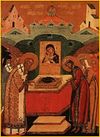
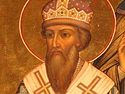 St Photius the Metropolitan of KievSaint Photius, Metropolitan of Kiev and All Russia, was by birth a Greek from the Peloponnesian city of Monembasia (Malbasia). |
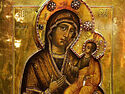 Icon of the Mother of God of TheodotievThis Icon appeared in 1483 in the vicinity of Ryazan in a desert place called "Staroe," near the village of Theodotiev. |
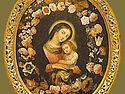
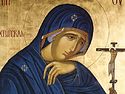 Icon of the Mother of God of AkhtyrThe Akhtyr Icon of the Most Holy Theotokos appeared on July 2, 1739 in the village of Akhtyr in the area of Kharkov, east of Kiev. |