| Previous day | 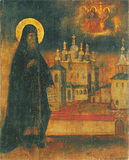
|
Next day |
| Old Style
July 7
|
Sunday |
New Style
July 20
|
| 6th Sunday after Pentecost. Tone 5. |  No fast.
|
 St. Thomas of Mt. Maleon (10th c.). St. Acacius, who is mentioned in The Ladder (6th c.).
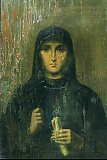
St. Eudocia, in monasticism Euphrosyne, grand duchess of Moscow (1407). Martyrs Peregrinus, Lucian, Pompeius, Hesychius, Pappias, Saturninus, and Germanus, of Dyrrachium in Macedonia (2nd c.). Hieromartyr Evangelus, bishop of Tomis in Moesia (ca. 284-305). Martyr Cyriaca (Dominica, or Nedelja) of Nicomedia (305-311). Hieromartyr Epictetus, priest, and Monk-martyr Astion, at Halmyris in Scythia Minor (Romania) (290).
St. Pantaenus the Confessor, of Alexandria (203). St. Hedda, bishop of the West Saxons (705). St. Willibald, bishop of Eichstatt, Anglo-Saxon missionary to the Germans (781-787). St. Maelruain of Tallaght (Ireland) (787).
Repose of Archimandrite Paisius (Tanasijevic) of the St. Prochorus of Pchinja Monastery, Serbia (2003).
Thoughts for Each Day of the Year
According to the Daily Church Readings from the Word of God
By St. Theophan the Recluse

Sixth Sunday After Pentacost. [Rom. 12:6-14; Matt. 9:1-8]
The Lord forgives the sins of the man sick of the palsy. One should rejoice; but the evil mind of the learned scribes says: “This man blasphemeth.” Even after the miracle of the healing of the man sick of the palsy—a confirmation of the comforting truth that the Son of man hath power on earth to forgive sins—the people glorified God; but nothing is said about the scribes, probably because they continued to weave their deceitful questions even after such a miracle. The mind without faith is a schemer; it constantly hammers out its evil suspicions and weaves blasphemy against the whole realm of faith. As for miracles—it either doesn’t believe in them, or it demands a tangible one. But when a miracle is given that would obligate one to submit to the faith, this mind is not ashamed to turn away from it, distorting or slandering the miraculous works of God. It treats irrefutable evidence of God’s truth in the same way. It is sufficiently and cogently presented with both experiential and intellectual proof, but it covers even this with doubt. Sort out all that it produces and you will see that in this there is only deceit, although its own language calls it cleverness, and you are unwillingly led to the conclusion that cleverness and deceit are one and the same. In the realm of faith the Apostle says, We have the mind of Christ. Whose mind is outside of the realm of faith? The evil one’s. That is why deceit has become its distinguishing characteristic.
Articles
 St. Euphrosyne of Moscow: to Be a Princess Means to Serve Your Fatherland, God, and PeopleOlga SokirkinaSt. Euphrosyne became the only woman representative of Muscovy to be ranked among the saints. |