


| Previous day | 
|
Next day |
| Old Style
July 28
|
Sunday |
New Style
August 10
|
| 9th Sunday after Pentecost. Tone 8. |  No fast.
|
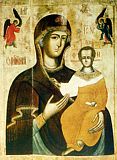
 Icon of the Most Holy Theotokos “Of Smolensk” (1047).
  Holy Apostles of the Seventy and Deacons: Prochorus, Nicanor, Timon, and Parmenas (1st c.). St. Pitirim, bishop of Tambov (1698). Synaxis of the Saints of Tambov.
Martyr Julian of Dalmatia (ca. 138-161). Martyr Eustathius the Soldier, of Ancyra (ca. 316). Martyr Acacius of Apamea (ca. 321). St. Paul of Xeropotamou, Mt. Athos (996). St. Moses, wonderworker, of the Kiev Caves (13th c.-14th c.). St. Anthony, bishop of Rostov, Yaroslavl, and Belozersk (1336). St. Joseph, founder of Holy Trinity-Kozlov Monastery (Michurinsk) (1660-1661). St. Daria, abbess, of Sezenovo (1858).
New Hieromartyr Basil (Erekaev), hieromonk of Sarov Monastery (1937).
Icon of the Most Holy Theotokos “Umileniye” (“Of Tender Feeling”) of Diveyevo, before which St. Seraphim reposed (1885). Icons of the Most Holy Theotokos “Of the Lavra in Suprasl” (Poland) (16th c) and “Seven Lakes” (17th c.).
Sts. Ursus and Leobatius (Leubais), abbots, of Gaul (ca. 500). St. Samson, bishop of Dol, in Brittany (ca. 565). St. Irene Chrysovolantou of Cappadocia (912). St. George the Builder, of Iveron, Mt. Athos (1029). New Martyr David of Aleppo (1660). New Hieromartyr Milos Bilbija, priest, of Grkovci-Crni Lug (Bosnia and Herzegovina) (1916). New Hieromartyr Ignatius of Jablechna (Chelm and Podlasie, Poland) (1942).
Thoughts for Each Day of the Year
According to the Daily Church Readings from the Word of God
By St. Theophan the Recluse

Ninth Sunday After Pentacost. [I Cor. 3:9-17; Matt. 14:22-34]
The holy apostle Peter, with the Lord’s permission, gets down from the ship and walks on the water; then he yields to the movement of fear and begins to drown. The fact that he decided upon such an unusual act, hoping in the Lord, is nothing deserving reprimand—otherwise the Lord would not have allowed him to do this. The reprimand comes because he did not sustain the original state of his soul. He was filled with inspired hope in the Lord’s ability to do anything, and this gave him the boldness to entrust himself to the waves. Several steps were already made along this new path—it was necessary only to stand more firmly in hope, gazing at the Lord Who is near, and at the experience of walking in His strength. Instead, gave himself over to human thoughts: “The wind is strong, the waves are great, the water is not firm;” and this shook loose and weakened his firmness of faith and hope. Because of this he broke away from the Lord’s hands, and, left to the operation of nature’s laws, began to drown. The Lord rebuked him: O ye of little faith! Why did you doubt? showing that in this lay the entire reason for the misfortune. Behold a lesson for all who undertake something, great or small, with the aim of pleasing the Lord! Keep your first state of faith and hope, from which a great virtue is born—patience in doing good, which serves as the basis for a God-pleasing life. As long as these dispositions are maintained, inspiration for labouring on the path begun does not go away; and obstacles, no matter how great they may be, are not noticed. When these dispositions weaken, the soul is filled with human reasoning about human methods of preserving one’s life and conducting the affairs which one has begun. But since this reasoning always turns out to be powerless, fear of how one should be enters the soul; from this comes wavering—wondering whether or not to continue—and in the end comes a complete return. You must do it this way; if you begin, keep it up—chase away troubling thoughts, and be bold in the Lord, Who is nearby.
Articles
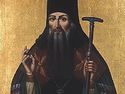 St. Pitirim the Bishop of TambovSaint Pitirim, Bishop of Tambov, in the world Procopius, was born 27 February 1645 (or 1644) in the city of Vyazma. |
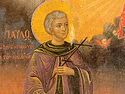
 Holy New Martyr Ignatius (Bazyluk)Father Ignatius was one of the oldest monks in the monastery, and he fulfilled the obedience of ringing the bells for church services. |